The Shield Down the Drain
Clinical Vignette
A 58-year-old man with biopsy-proven membranous nephropathy is managed in the nephrology clinic for a persistently nephrotic state. Despite treatment with tacrolimus and prednisone, his most recent studies show proteinuria of 8.5 g/day, serum albumin 1.9 g/dL, total cholesterol 324 mg/dL, and serum IgG 312 mg/dL (reference 700–1600). He has 2+ lower-extremity edema but has otherwise been stable.
He presents to the emergency department after two days of fever to 39.1 °C, rigors, purulent cough, right-sided pleuritic chest pain, and progressive dyspnea. On examination his respiratory rate is 26/min, oxygen saturation 90% on room air, and he has focal crackles over the right lower lobe. The white blood cell count is 14.8 x 10³/µL with a left shift. Chest radiography reveals a dense right lower lobe consolidation, and blood cultures are obtained before antibiotics are administered.
Within twenty-four hours the blood culture bottles flag positive, and the Gram stain is shown below.
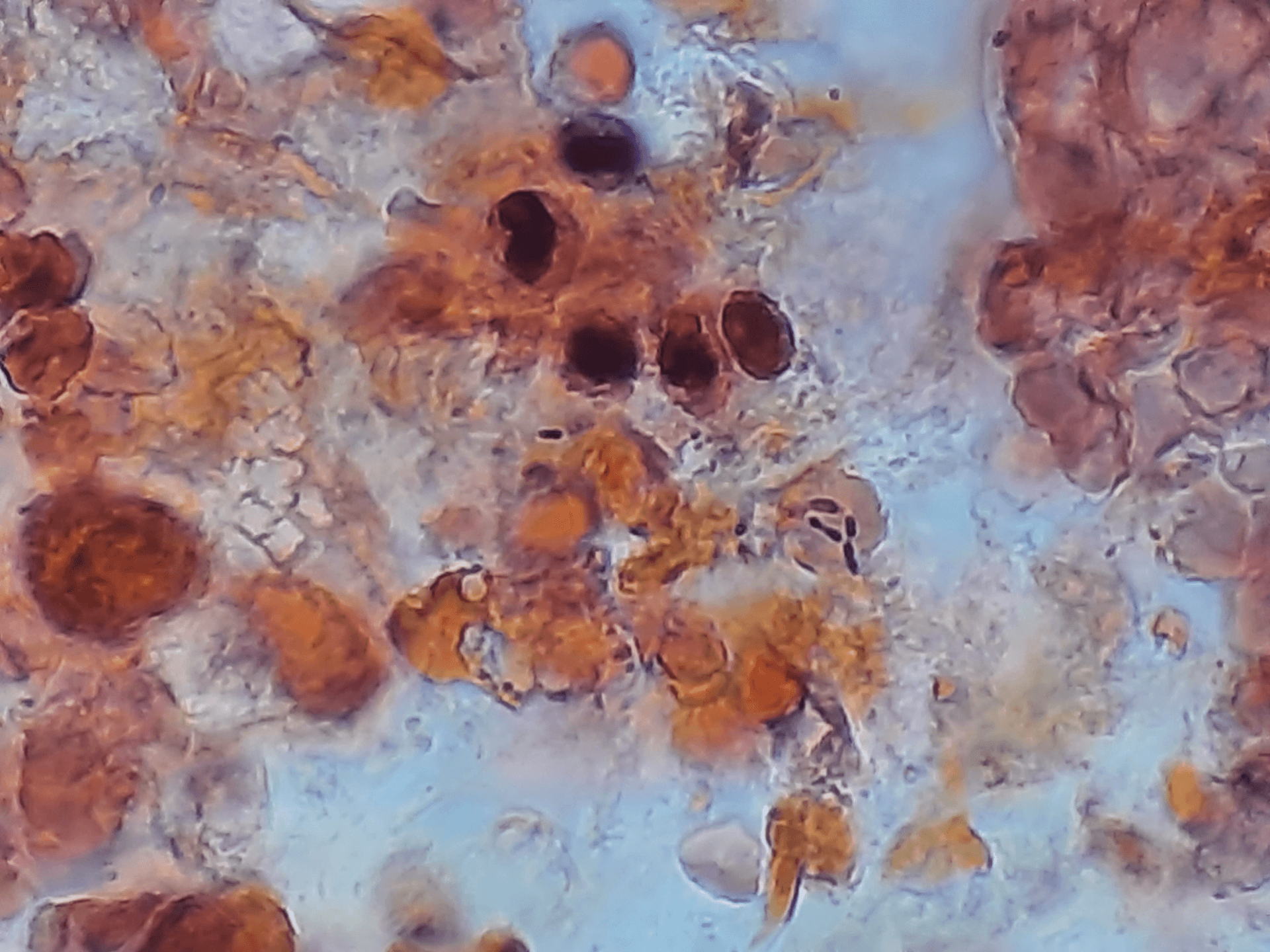
Gram stain prepared from the positive blood culture bottle.
Question 1
Which organism is most likely responsible for this patient's pneumonia and bacteremia?
Select one option to submit your answer and view live poll results.
Question 2
Which mechanism best accounts for this patient's increased susceptibility to this organism?
Select one option to submit your answer and view live poll results.
Question 3
After appropriate empiric and definitive antibiotics, which measure is most important for reducing the risk of recurrent invasive pneumococcal disease in this patient?
Select one option to submit your answer and view live poll results.
References
Ponticelli C, Moroni G. Nephrotic syndrome: pathophysiology and consequences. Journal of Nephrology. 2023;36(8):2179-2190.
Ogi M, Yokoyama H, Tomosugi N, et al. Risk factors for infection and immunoglobulin replacement therapy in adult nephrotic syndrome. American Journal of Kidney Diseases. 1994;24(3):427-436.
Kidney Disease: Improving Global Outcomes (KDIGO) Glomerular Diseases Work Group. KDIGO 2021 Clinical Practice Guideline for the Management of Glomerular Diseases. Kidney International. 2021;100(4S):S1-S276.
Kobayashi M, Pilishvili T, Farrar JL, et al. Pneumococcal Vaccine for Adults Aged ≥19 Years: Recommendations of the Advisory Committee on Immunization Practices, United States, 2023. MMWR Recommendations and Reports. 2023;72(3):1-39.