The Border She Couldn't Cross
Clinical Vignette
A 29-year-old primigravida at 20 weeks' gestation is seen in the pre-travel clinic. Her pregnancy has been uncomplicated, with a normal anatomy ultrasound and reassuring prenatal labs. She takes only a prenatal vitamin, has no chronic medical conditions, no known glucose-6-phosphate dehydrogenase (G6PD) deficiency, and no personal or family history of psychiatric illness, seizures, or cardiac conduction disease.
She is planning a seven-week trip in three weeks. The itinerary begins with three weeks on safari and in rural communities in Kenya and Tanzania, continues with two weeks in rural and urban India, and ends with two weeks along the Thai–Cambodian border, where she will visit family. She is meticulous about food and water precautions and has already received the required and recommended vaccines. She now wants to know how to protect herself and her baby from malaria across all three legs.
On examination she is afebrile with a blood pressure of 112/68 mmHg and a fundal height appropriate for dates. The remainder of her examination is unremarkable. The vector responsible for transmitting malaria in each of her destinations is shown below.
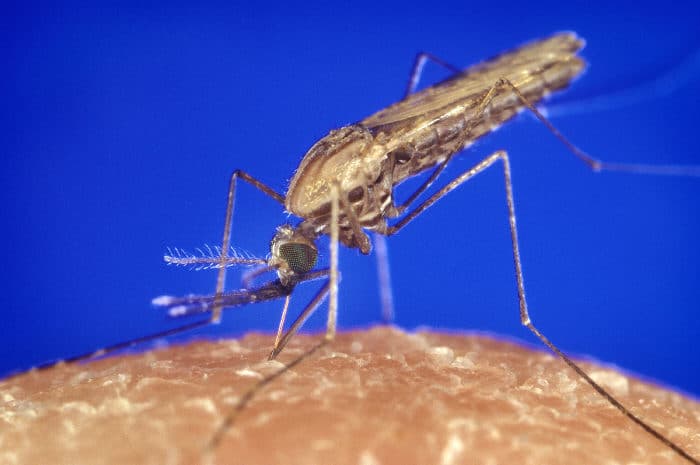
The vector she is trying to avoid.
Question 1
Her itinerary includes a final two-week leg along the Thai–Cambodian border. What is the most appropriate recommendation regarding this portion of her trip?
Select one option to submit your answer and view live poll results.
Question 2
For the East African and Indian portions of her trip, which chemoprophylactic regimen is the safest and most appropriate?
Select one option to submit your answer and view live poll results.
Question 3
She completes the East African and Indian legs on her prophylaxis and returns at 27 weeks' gestation feeling well. Knowing the regions she visited have substantial P. vivax and P. ovale transmission, she asks whether she should take a radical-cure course now to prevent a late relapse. What is the most appropriate recommendation?
Select one option to submit your answer and view live poll results.
References
Tan KRB, Saunders DL, Cappaert TC, et al. Mefloquine Chemoprophylaxis During Pregnancy: A Review of the Evidence for Drug-Associated Teratogenicity. Journal of Travel Medicine. 2024;31(3):taae049.
Centers for Disease Control and Prevention. The Pre-Travel Consultation: Malaria. In: CDC Yellow Book 2024: Health Information for International Travel. Oxford University Press; 2025.
World Health Organization. Guidelines for Malaria. Geneva: World Health Organization; 2023.
Schlagenhauf P, Blumentals WA, Suter P, et al. Pregnancy and fetal outcomes after exposure to mefloquine in the pre- and periconception period and during pregnancy. Clinical Infectious Diseases. 2012;54(11):e124-e131.