The Bite You Didn't Feel
Clinical Vignette
A 31-year-old graduate student presents with four days of abrupt fever, severe frontal headache, retroorbital pain, diffuse myalgias, and aching wrists and knees that began two days after returning from Manaus, Brazil. She had spent two weeks in the Amazon assisting with a field ecology project along floodplain forest margins and sleeping in screened but not sealed housing near the river. She also spent one afternoon wading through shallow flooded trails to reach a sampling site after heavy rain. She took no daily medications and had no chronic medical problems.
During the trip she had frequent daytime mosquito exposure and, near dusk, repeated swarms of nearly invisible insects around her legs and forearms despite repellent. She noticed small pruritic papules by morning but paid little attention to them. Two days before presentation she developed shaking chills and a pounding headache, followed by fatigue so intense she had trouble climbing stairs. The next day a faint erythematous rash appeared over the trunk and proximal arms, along with nausea and one loose stool. She has had no cough, conjunctivitis, bleeding, or jaundice.
On examination her temperature is 39.1°C, heart rate 101 bpm, blood pressure 112/68 mmHg, respiratory rate 16 breaths per minute, and oxygen saturation 99% on room air. She appears miserable but nontoxic. A faint maculopapular eruption is visible across the chest and upper back. There is no eschar, no meningismus, no synovitis, and no hepatosplenomegaly. The remainder of the examination is unrevealing.
White blood cell count is 4,300/μL, platelet count 128,000/μL, AST 52 U/L, ALT 47 U/L, and creatinine is normal. Thick and thin smears for malaria are negative twice. Dengue NS1 antigen and dengue RT-PCR are negative. With malaria and dengue testing unrevealing, the team broadens the workup for other tropical viral syndromes and a few non-viral mimics.
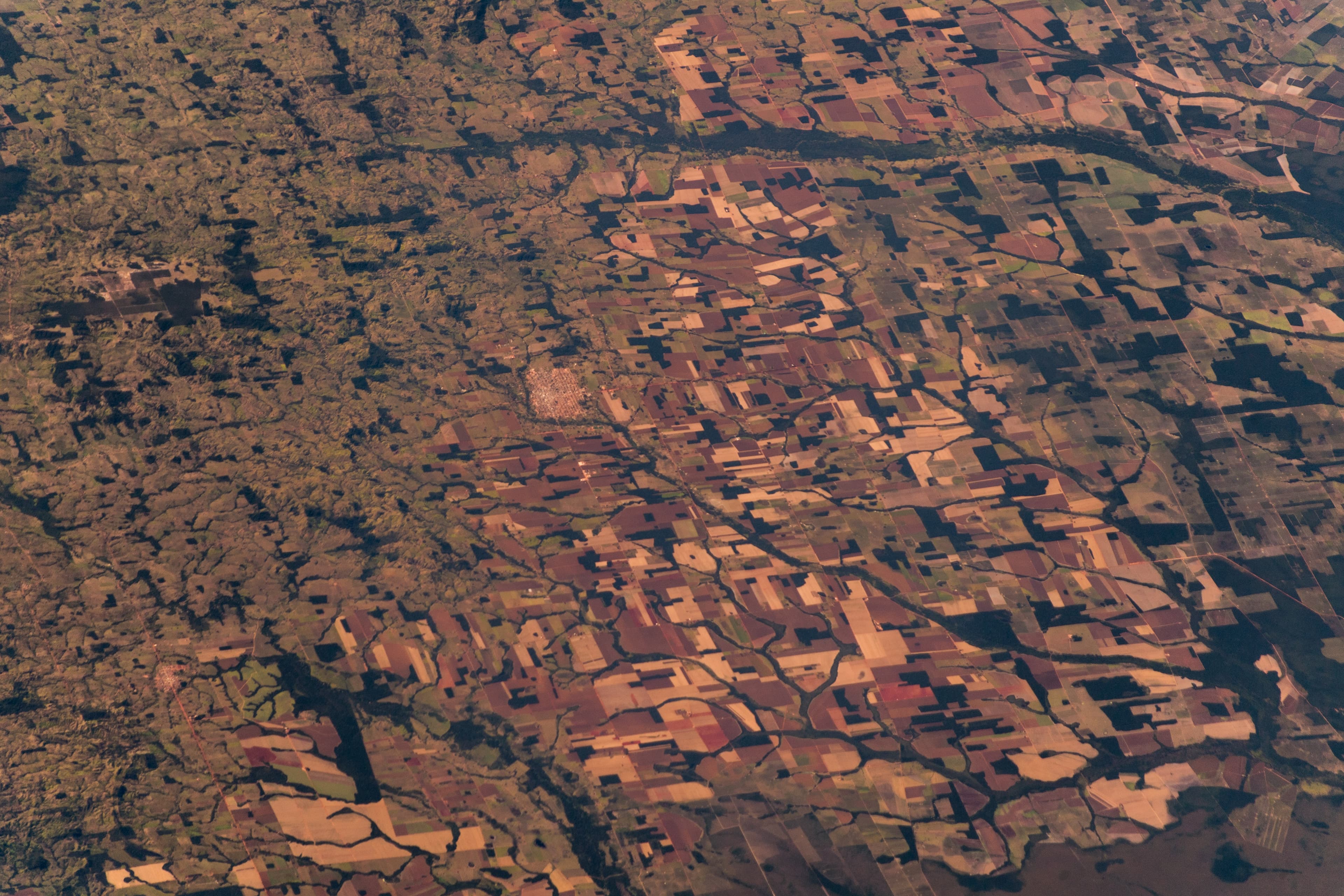
Satellite view of the Amazon rainforest, where a wide range of arboviral infections circulate in overlapping ecological niches.
Question 1
What is the most likely diagnosis?
Select one option to submit your answer and view live poll results.
Question 2
Which vector most likely transmitted this infection?
Select one option to submit your answer and view live poll results.
Question 3
What is the most appropriate management?
Select one option to submit your answer and view live poll results.
References
Wesselmann KM, Postigo-Hidalgo I, Pezzi L, de Oliveira-Filho EF, Fischer C, de Lamballerie X, Drexler JF. Emergence of Oropouche fever in Latin America: a narrative review. Lancet Infectious Diseases. 2024;24(7):e439-e452.
Scachetti GC, Forato J, Claro IM, Hua X, Salgado BB, Vieira A, et al. Re-emergence of Oropouche virus between 2023 and 2024 in Brazil: an observational epidemiological study. Lancet Infectious Diseases. 2025;25(2):166-175.
Naveca FG, Almeida TAP, Souza V, Nascimento V, Silva D, Nascimento F, et al. Human outbreaks of a novel reassortant Oropouche virus in the Brazilian Amazon region. Nature Medicine. 2024;30(12):3509-3521.
Rojas A, Stittleburg V, Cardozo F, Bopp N, Cantero C, Lopez S, et al. Real-time RT-PCR for the detection and quantitation of Oropouche virus. Diagnostic Microbiology and Infectious Disease. 2020;96(1):114894.
Travassos da Rosa JF, de Souza WM, Pinheiro FP, Figueiredo ML, Cardoso JF, Acrani GO, Nunes MRT. Oropouche virus: clinical, epidemiological, and molecular aspects of a neglected orthobunyavirus. American Journal of Tropical Medicine and Hygiene. 2017;96(5):1019-1030.