The Hike and the Tender Node
Clinical Vignette
A 34-year-old man presents to an emergency department in Sacramento with 3 days of abrupt fever, chills, headache, and severe malaise. He returned 5 days ago from a long weekend camping trip in the Sierra Nevada, where he slept in a tent near a trailhead campground and hiked through dry brush and granite outcrops. He remembers seeing several ground squirrels near the campsite and noticed rodent burrows around the picnic area. On the last morning of the trip, he found a small itchy papule near his right ankle and assumed it was a mosquito bite.
Over the next 48 hours, he developed progressive pain in the right groin that became severe enough to make walking difficult. An urgent care clinic diagnosed cellulitis and prescribed cephalexin, but he continued to have high fevers and rigors. He has no cat scratches, dog bites, rabbit exposure, freshwater exposure, international travel, injection drug use, or sick contacts. He denies cough, dyspnea, hemoptysis, chest pain, abdominal pain, diarrhea, or dysuria.
On examination, temperature is 39.6 C, heart rate 118/min, blood pressure 106/68 mmHg, respiratory rate 18/min, and oxygen saturation 98% on room air. He appears ill but is alert and speaking in full sentences. A 1 cm crusted papule is present just above the right medial ankle without surrounding purulence. The right inguinal region contains a 5 cm exquisitely tender lymph node with overlying warmth and faint erythema; palpation causes him to recoil. There is no lymphangitic streaking, no diffuse rash, and no hepatosplenomegaly. Lung examination is clear.
Laboratory studies show white blood cells 18.7 x 10^3/uL with 88% neutrophils and 12% bands, hemoglobin 14.2 g/dL, platelets 112 x 10^3/uL, creatinine 1.3 mg/dL, AST 74 U/L, ALT 66 U/L, lactate 2.4 mmol/L, and C-reactive protein 186 mg/L. Blood cultures are obtained. Ultrasound of the groin shows a markedly enlarged hyperemic lymph node with surrounding edema but no simple drainable abscess. A chest radiograph is clear.
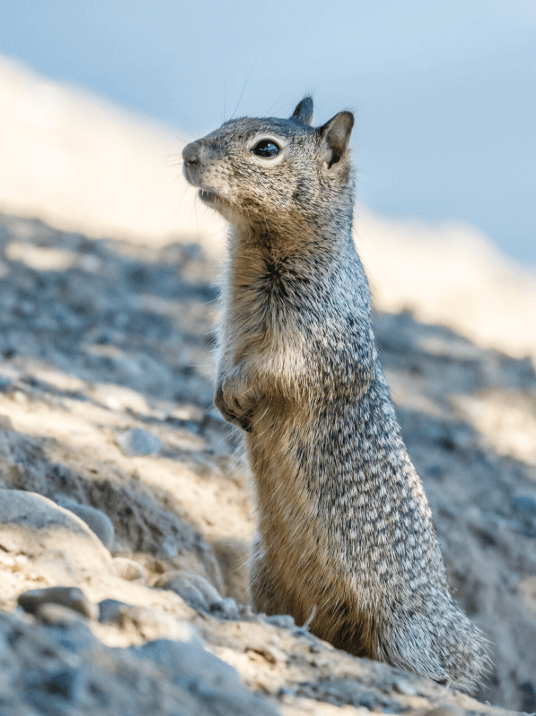
Ground squirrel in the Sierra Nevada.
Question 1
What is the most likely diagnosis?
Select one option to submit your answer and view live poll results.
Question 2
What diagnostic step is most appropriate now?
Select one option to submit your answer and view live poll results.
Question 3
What is the best treatment?
Select one option to submit your answer and view live poll results.
References
Centers for Disease Control and Prevention. Plague: Clinical Features.
Centers for Disease Control and Prevention. Plague: Clinical Testing and Diagnosis.
Centers for Disease Control and Prevention. Plague: Treatment and Prophylaxis.
California Department of Public Health. Plague.