HistorID
When Zika Was Still a Forest
Long before Zika showed up in pregnancy counseling and travel warnings, it was just the name of a forest near Entebbe and the fever of one monkey above the trees.
Zika did not enter medicine as a famous syndrome. It arrived through surveillance, vector work, and landscape. That early history is a useful reminder that arboviruses often become visible in ecology before they become legible in the clinic.
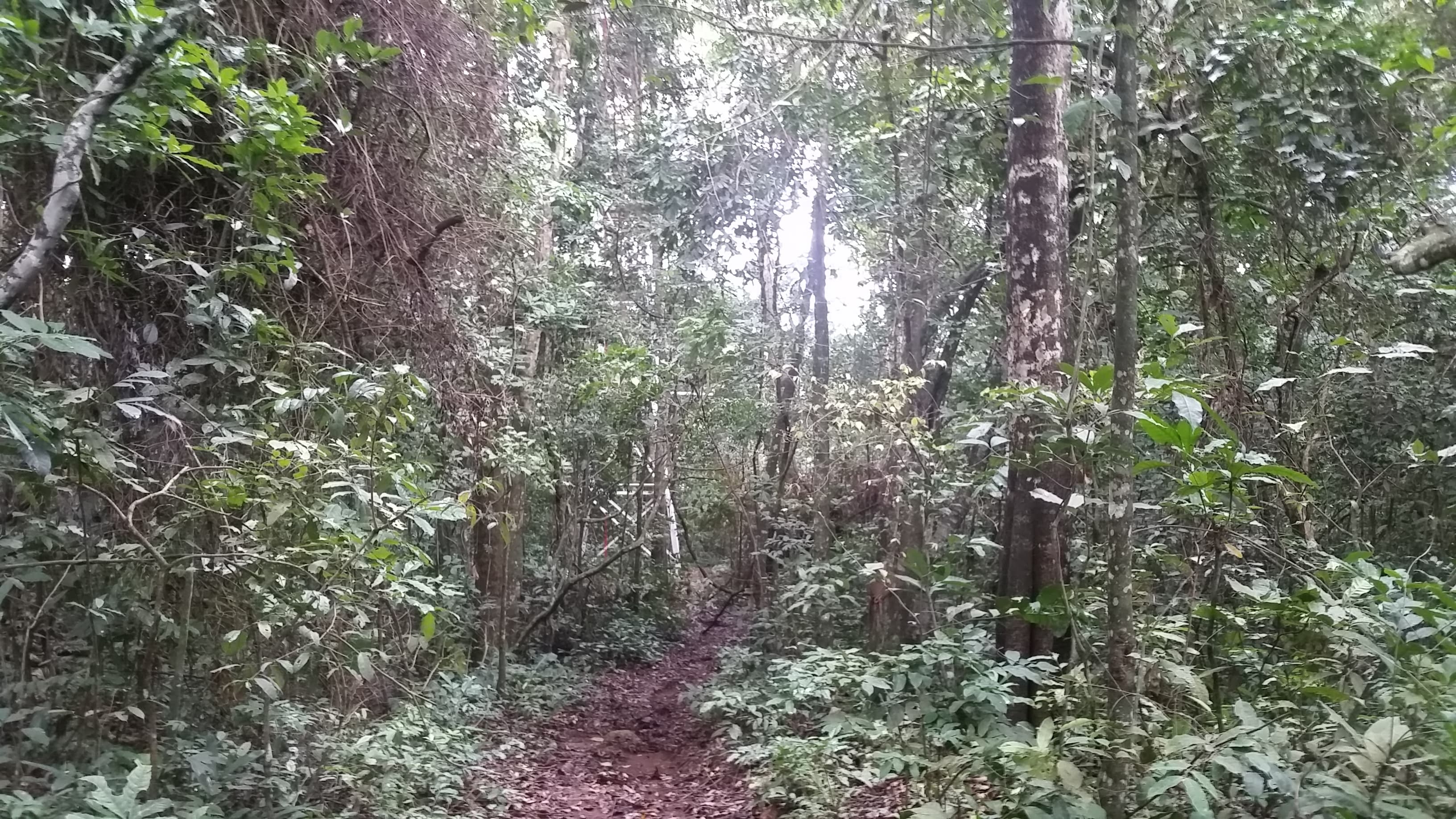
The name came from a place before it became a warning. Near Entebbe, in a small forest used for arbovirus research, investigators were watching yellow fever move through mosquitoes and primates. In 1947, one of their sentinel rhesus monkeys developed fever. That sick animal, not a crowded ward or a dramatic outbreak, gave medicine its first Zika virus isolate.
Historical scene
Mid-20th century East African virus research was slow, practical, and deeply tied to place. The work depended on tree platforms, mosquito traps, caged monkeys, and patience. This was not yet a bedside story. It was field ecology with a laboratory attached. Zika Forest drew attention because it was dense, humid, and busy with vector life. Even the name carries that texture: Ziika is reported in Luganda to mean "overgrown."
What happened
On 18 April 1947, a captive sentinel rhesus monkey developed fever while stationed in the forest. Its serum was taken back to the laboratory at Entebbe and inoculated into mice. From those experiments, investigators recovered a filterable transmissible agent. The new virus took its name from the forest where the monkey had been placed. In 1948, the virus was also recovered from Aedes africanus mosquitoes collected in the same setting, which made the mosquito-borne frame much harder to dismiss.
Human evidence came next, but quietly. By 1952, investigators had serologic evidence that people in East Africa had been infected, and early human descriptions followed. That still did not make Zika famous. For decades it remained a small arbovirus story, recognized in Africa and parts of Asia, but generally treated as uncommon and clinically mild.
Why it changed infectious diseases
What makes this story useful is its order. The forest came first. Then the mosquito. Then the monkey. Human disease recognition followed after that. Zika entered medicine through surveillance rather than through a spectacular clinical syndrome. That sequence is classic arbovirology. The vector and the landscape speak first, and the clinic catches up later.
Why the early story still matters
The later global Zika era changed the stakes completely. Once outbreaks in the Pacific and the Americas linked infection to congenital Zika syndrome and neurologic complications, the old forest isolate no longer looked obscure. That is exactly why the early history holds up. A virus can spend decades looking minor, then return with very different consequences once transmission expands and a vulnerable population is exposed.
References
Dick GWA, Kitchen SF, Haddow AJ. Zika virus. I. Isolations and serological specificity. Trans R Soc Trop Med Hyg. 1952;46(5):509-520.
Hayes EB. Zika virus outside Africa. Emerg Infect Dis. 2009;15(9):1347-1350.
World Health Organization. The history of Zika virus. Published 7 February 2016.
World Health Organization. Zika virus fact sheet. Updated 6 November 2025.
Kaddumukasa MA, Mutebi JP, Lutwama JJ, Masembe C, Akol AM. Mosquitoes of Zika Forest, Uganda: species composition and relative abundance. J Med Entomol. 2014;51(1):104-113.