HistorID
When West Nile Was Just a District
Most people hear West Nile virus and picture the Nile River. The virus is not named after the Nile. It is named after the West Nile district of Uganda, a region on the western side of the Albert Nile. A place most of the world had never heard of gave its name to a virus that now fills mosquito surveillance reports from Queens to California.
The name West Nile virus preserves the geography of discovery, not the geography of disease. A woman from Omogo with a mild fever in 1937, a Rockefeller Foundation virologist injecting her blood into mouse brains during yellow fever surveillance, and a district in Uganda together produced a name that would cross the Atlantic 62 years later and become a household word. The name was an accident of place. It turned out to be permanent.
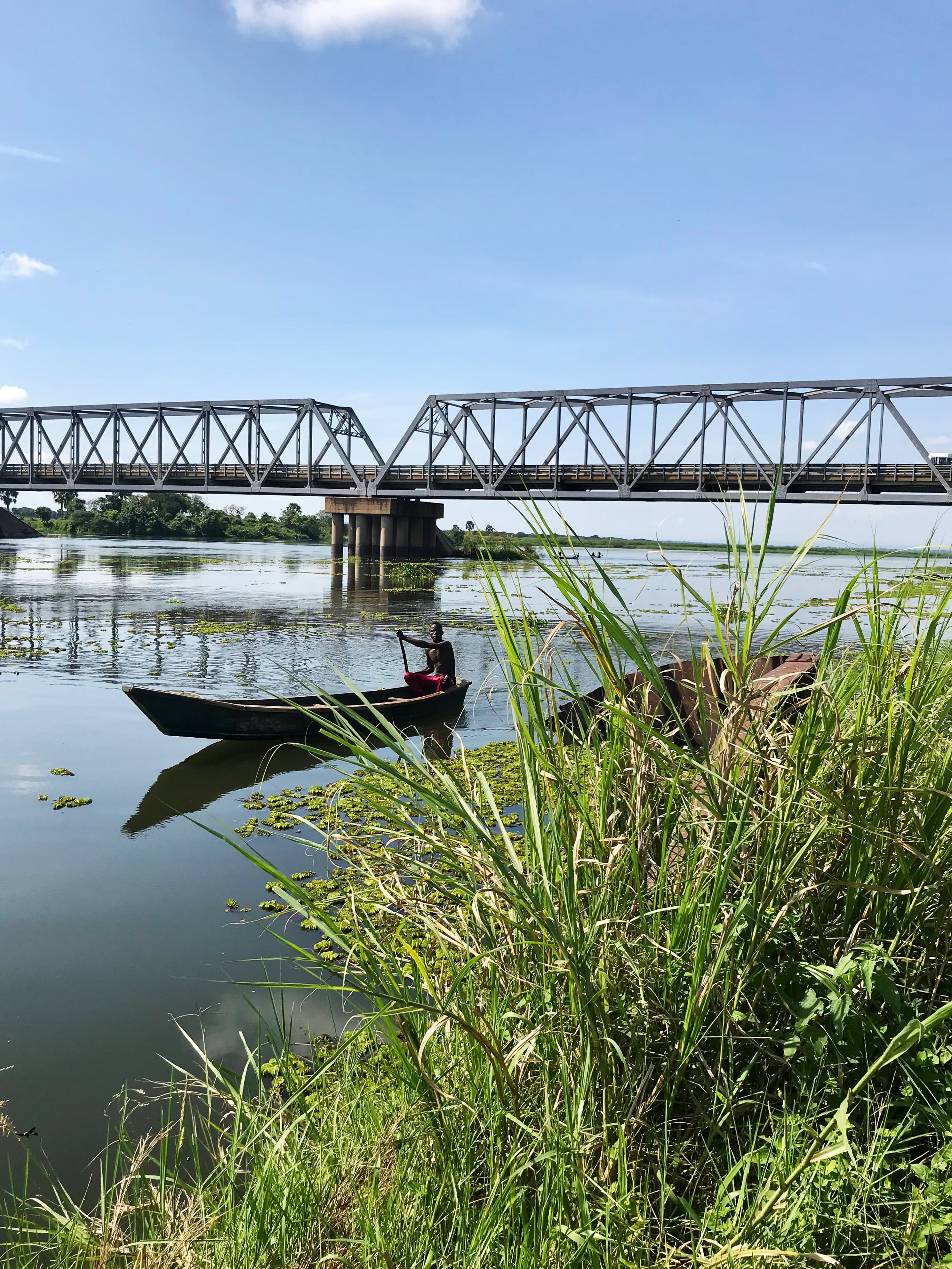
It is strange that a virus feared from New York to Los Angeles is named after a place most people cannot find on a map. West Nile virus is not named after the Nile River. It is named after the West Nile district of northwestern Uganda, a region that sits west of the Albert Nile, one of the quieter sections of the White Nile, far upstream from Egypt and the pyramids. In 1937, a woman with a fever in a village called Omogo gave a blood sample during routine yellow fever surveillance. That sample yielded a virus that would not make headlines for another 62 years, and when it did, the name was already set. It had been set the moment Kenneth C. Smithburn saw his mice convulse.
Historical scene
The Yellow Fever Research Institute in Entebbe, Uganda, was a Rockefeller Foundation operation. Established in 1936, its job was to track yellow fever across East Africa by sampling the blood of febrile patients and testing it in mice. Kenneth C. Smithburn, an American physician and virologist, was one of the scientists stationed there. The work was methodical: draw blood, inject it into the brains of Swiss mice, watch for encephalitis. If the mice got sick, a neurotropic virus was present. Most of the time it was yellow fever. Sometimes it was not. In 1937, a sample from Omogo was not.
What happened
The sample came from an adult woman with a mild febrile illness. Her name was never recorded. Her blood was injected intracerebrally into mice, and the mice developed encephalitis. Brain tissue from the sick mice was passaged into more mice, establishing a stable viral isolate. Smithburn and his colleagues, T.P. Hughes, A.W. Burke, and J.H. Paul, characterized the virus serologically and found it was related to Japanese encephalitis virus and St. Louis encephalitis virus, both known flaviviruses. But it was distinct. In 1940, they published the description in the American Journal of Tropical Medicine and Hygiene. The virus was named after the place it came from: the West Nile district. The woman recovered. She disappeared from the record. Her virus did not.
For the next six decades, West Nile virus was a relatively obscure African arbovirus. It surfaced periodically: outbreaks in Israel in the early 1950s, among birds in the Nile Delta of Egypt in 1953, and a human outbreak in southern France in 1962. It was pathogenic to humans but not considered a threat to birds. That changed in 1997, when a highly virulent strain emerged in Israel that killed domestic geese and wild birds. Two years later, in the summer of 1999, dead crows began appearing in Queens, New York. The virus that had been named for a district in Uganda had crossed the Atlantic.
The strain that arrived in New York was genetically almost identical to the one circulating in Israel and Tunisia. The most likely vector was an infected bird or mosquito carried on a transatlantic flight or ship. Within five years, the virus had spread to all 48 contiguous states, southern Canada, Mexico, and the Caribbean. The name West Nile, set in a laboratory notebook in Entebbe in 1937, was now printed in mosquito surveillance reports, CDC alerts, and newspaper headlines across the Western Hemisphere.
Why it changed infectious diseases
The arrival of West Nile virus in New York City in 1999 was a watershed for arboviral surveillance. Before that, American mosquito control programs focused on nuisance species and a handful of endemic viruses like St. Louis encephalitis. West Nile virus forced public health agencies to build or expand systematic dead bird reporting networks, mosquito pool testing, and sentinel chicken programs. Those systems later proved essential for tracking other invasive threats, including Zika and chikungunya. A virus named for a district in Uganda restructured how the United States monitors arboviruses.
Why the name still matters now
The name has not changed. No international committee has proposed renaming the virus after its virology or its clinical syndrome or its most famous outbreak location. It is still named after the West Nile district of Uganda, a place that sits west of the Albert Nile, a river most people outside East Africa have never seen. The name is a fossil from a yellow fever surveillance program in 1937. It carries no information about flaviviruses, or mosquito vectors, or dead crows in Queens. What it carries is geography: a district, a river, a fever in a woman whose name was lost, and a virologist who was looking for something else when he found something new.
References
Smithburn KC, Hughes TP, Burke AW, Paul JH. A neurotropic virus isolated from the blood of a native of Uganda. Am J Trop Med Hyg. 1940;20:471-492.
World Health Organization. West Nile virus fact sheet.
Nash D, Mostashari F, Fine A, et al. The outbreak of West Nile virus infection in the New York City area in 1999. N Engl J Med. 2001;344(24):1807-1814.
Sejvar JJ. West Nile virus: an historical overview. Ochsner J. 2003;5(3):6-10.