HistorID
When Plague Taught Ports to Wait
Plague forced cities to treat time itself as a medical tool. If a ship, a merchant, or a body might carry death, waiting became policy.
Plague pushed surveillance, exclusion, and quarantine from improvised fear into recognizable public-health practice.
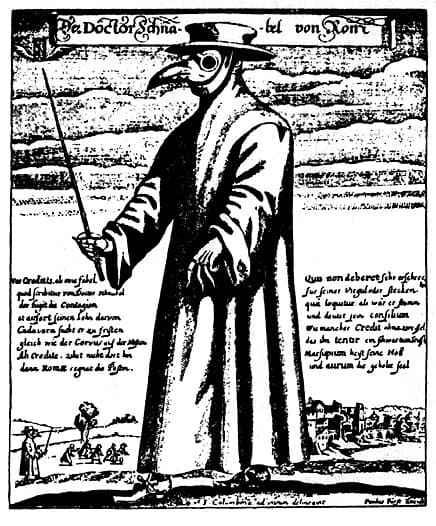
Plague is often reduced to one overwhelming image: mass death. That image is deserved, but it hides another part of the story that matters just as much for Infectious Diseases history. Plague forced cities to experiment with control. The question was no longer only how to pray, flee, or bury. It was how to slow movement, inspect arrivals, and buy time before a pathogen entered the urban core.
Historical scene
The Black Death hit a world tied together by trade routes, port cities, armies, and fear. People did not know about Yersinia pestis, fleas, or rodent reservoirs, but they knew that disease followed contact and travel in ways that were hard to ignore. Across the Mediterranean and beyond, authorities started building responses around ships, passengers, merchandise, and delay. In other words, they began to govern exposure before they understood the microbe.
What happened
In plague-era port systems, incoming travelers and goods could be held outside the city for a fixed period before entry. That logic, which would later be formalized as quarantine, did not solve plague completely and was often inconsistently applied. But it changed the structure of response. Inspection, waiting, cordons, and documentation became part of epidemic life. The plague doctor costume became famous, but the larger innovation was administrative: cities were learning that movement itself was a public-health variable.
Why it changed infectious diseases
Plague helped make epidemic control legible at the level of policy. Instead of responding only to visible illness, authorities began acting on the possibility of transmission. That shift is foundational for ID thinking. It marks the beginning of a recognizably modern instinct: if you cannot yet cure a disease, you may still alter its path by interrupting who or what gets to move.
Why quarantine keeps returning
Quarantine is one of the bluntest and most contested tools in public health. Every border screen, isolation order, and travel restriction replays some version of the same old argument: how long do you wait, whom do you restrict, and what does the delay cost? Plague did not answer those questions, but it forced governments to start asking them in administrative terms.
References
About Plague. Centers for Disease Control and Prevention.
Wheelis M. Biological warfare at the 1346 siege of Caffa. Emerg Infect Dis. 2002;8(9):971-975.
Slack P. Responses to plague in early modern Europe. In: Time of Plague. New York University Press; 1991.