HistorID
When Malaria Meant Bad Air
Summer near Rome had a reputation long before anyone could see a parasite in blood. People blamed the fever on bad air rising off the marshes, and the name they gave that threat stuck: malaria.
Malaria's name is a fossil from the miasma era. It preserved the wrong mechanism but a real epidemiologic clue: the dangerous places were marshy, mosquito-rich landscapes.
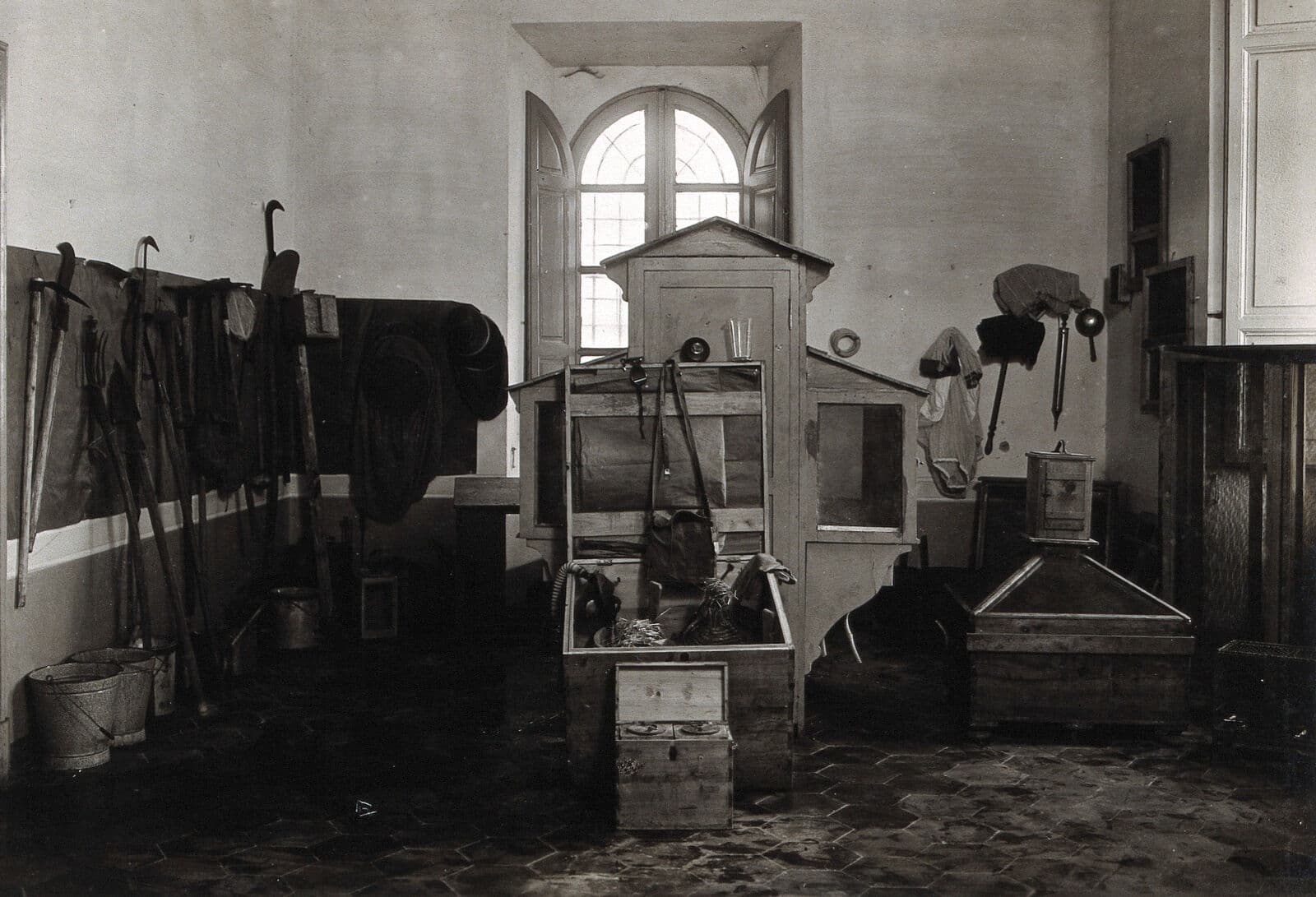
Before microscopy and vector biology, malaria was a landscape before it was a life cycle. Travelers, physicians, and locals around Rome learned to fear certain places at certain times: low ground, marsh edges, stagnant water, and summer evenings when the air felt heavy. They were wrong about what exactly was attacking them, but not wrong that the danger lived in the environment. The name they gave it, mal'aria, still carries that older map.
Historical scene
For centuries, the Roman Campagna and the Pontine marshes had a grim reputation. Fever seemed to rise with the season. Rural zones near standing water could look beautiful by day and feel ominous by dusk. Long before anyone knew about Plasmodium or Anopheles, people built an explanation from what they could observe: the sick clustered around wet ground, heat, and evening air. In Italian, that became mala aria, bad air, a phrase that hardened into the disease name itself.
What happened
The word traveled before the mechanism did. By the 18th century, English travelers were using malaria as a recognizable term for the deadly seasonal fevers associated with Rome. Horace Walpole wrote in 1740 of "a horrid thing called the malaria" that came every summer and killed people. The name made sense inside miasma theory, which treated foul air from marshes as the cause. What changed later was not the geography but the biology. In 1880, Alphonse Laveran identified the malaria parasite in blood. In 1897, Ronald Ross helped establish mosquito transmission. The air was acquitted. The marshes, in a way, were not.
Why it changed infectious diseases
Malaria's name is useful ID history because it captures a moment when epidemiology outran mechanism. People had noticed habitat, seasonality, and exposure pattern before microbiology could explain them. That is not a trivial lesson. Infectious-disease reasoning often begins with place, timing, and ecology before it reaches the lab. The old name also shows how clinical language can outlive the theory that produced it. Even after parasites and vectors replaced miasma, the word stayed.
Why the naming lesson still matters
Malaria is a reminder to be careful with old explanations without being smug about them. A bad theory can still contain a sharp observation. In this case, the observation was that wetlands, heat, housing, and evening exposure mattered because mosquitoes were doing the transmitting. Modern ID still works in that same tension. We want mechanism, but we also need the field eye that notices where disease is happening before the full explanation arrives.
References
Treccani. Malaria. Italian vocabulary entry tracing malaria to mal'aria, or mala aria.
Walpole H. Letter to Henry Seymour Conway, July 5, 1740, describing "a horrid thing called the malaria" in Rome. In: Letters of Horace Walpole.
World Health Organization. Terminology of Malaria and of Malaria Eradication. Geneva: WHO; 1963.
Neghina R, Neghina AM, Marincu I, Iacobiciu I. Malaria, a journey in time: in search of the lost myths and forgotten stories. Am J Med Sci. 2010;340(6):492-498.