HistorID
When Disease Reached the Inca First
By the time the Spanish pushed deeper into the Andes, the Inca world may already have been hit by epidemics that arrived ahead of them. Disease could move faster than conquest.
This history corrects a lazy historical instinct. Empires do not fall to microbes alone, but epidemics can shatter succession, trust, and political timing before the invaders fully arrive.
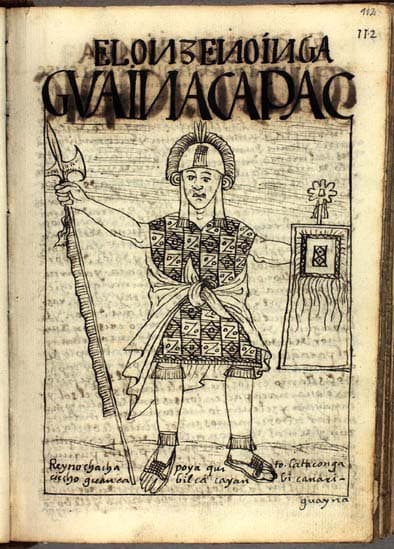
The fall of the Inca Empire is often told as a story of steel, cavalry, and audacity. Those mattered, but they were not the whole story. Before Spanish power was fully established in the Andean political center, epidemic disease may already have moved through the empire, hitting succession and stability first. That is what makes this history feel so modern: the first blow may not have been military.
Historical scene
The Inca world under Huayna Capac was large, administratively dense, and deeply connected. That kind of connectivity helps states govern, but it also gives pathogens routes. Old World infections introduced into the Americas did not need a conquistador physically present in every province to begin their damage. Trade, movement, and human networks could carry them onward. By the late 1520s, the empire was facing not just succession stress, but epidemiologic shock.
What happened
Huayna Capac died in 1527, and some sources have long identified smallpox as the likely cause, while others caution that the exact disease cannot be proven with confidence. What is much harder to dispute is the effect of epidemic mortality around the succession. Huayna Capac and the likely heir, Ninan Cuyochi, were both gone, and the resulting contest between Huascar and Atahualpa turned into civil war. When the Spanish entered that fractured landscape, they were not confronting the empire at its most stable.
Why it changed infectious diseases
This history matters in ID because it shows epidemic disease acting at the level of state structure, not just individual mortality. Infection can remove rulers, destabilize succession, intensify internal conflict, and change the timing of conquest without ever being the sole cause of collapse. That is a more useful lesson than the oversimplified line that "smallpox destroyed the Inca." The reality is harsher and more interesting: disease changed the conditions under which the conquest unfolded.
Why epidemics reorder power
We keep relearning the same principle: epidemics are political stress tests as much as clinical events. They expose who can adapt, who can govern, and what breaks first. In the Inca case, the central question is not whether one pathogen "caused" the fall, but how epidemic disruption changed the empire before the decisive encounters even occurred.
References
McCaa R, Nimlos A, Hampe Martinez T. Why blame smallpox? The death of the Inca Huayna Capac and the demographic destruction of Tawantinsuyu.
D'Altroy TN. The Incas. Wiley-Blackwell; 2014.
Huayna Capac and Inca imperial collapse. Royal Danish Library source and historical summaries.