HistorID
The Word That Means Mold
Mucor is the Latin word for mold. When Pliny the Elder catalogued the natural world in the first century AD, mucor was the word Romans used for the fuzzy decay that appeared on damp bread, on rotting wood, on anything left wet and unattended. It shares a root with mucus — the Proto-Indo-European *meug-, meaning slippery or slimy. In 1832, a Swedish priest and mycologist named Elias Magnus Fries took this ancient word for household rot and made it the formal scientific name of an entire order of fungi. The Romans' kitchen word had become a taxonomic designation. It would soon become something else entirely: the name on a pathology report that makes infectious disease physicians move faster than almost any other.
The word mucor has been describing mold for two thousand years. It appears in classical Latin, shares a root with mucus, and was formalized as the order Mucorales by the Swedish mycologist Elias Magnus Fries in his Systema Mycologicum (1832). Arnold Paltauf first described mucormycosis in a cancer patient in 1885, establishing the clinical entity. The order now contains approximately 55 genera including Rhizopus, the most common cause of mucormycosis, a disease with mortality rates of 50 to 80 percent depending on site of infection. The word is older than microbiology. The disease it names is among the most urgent in infectious diseases.
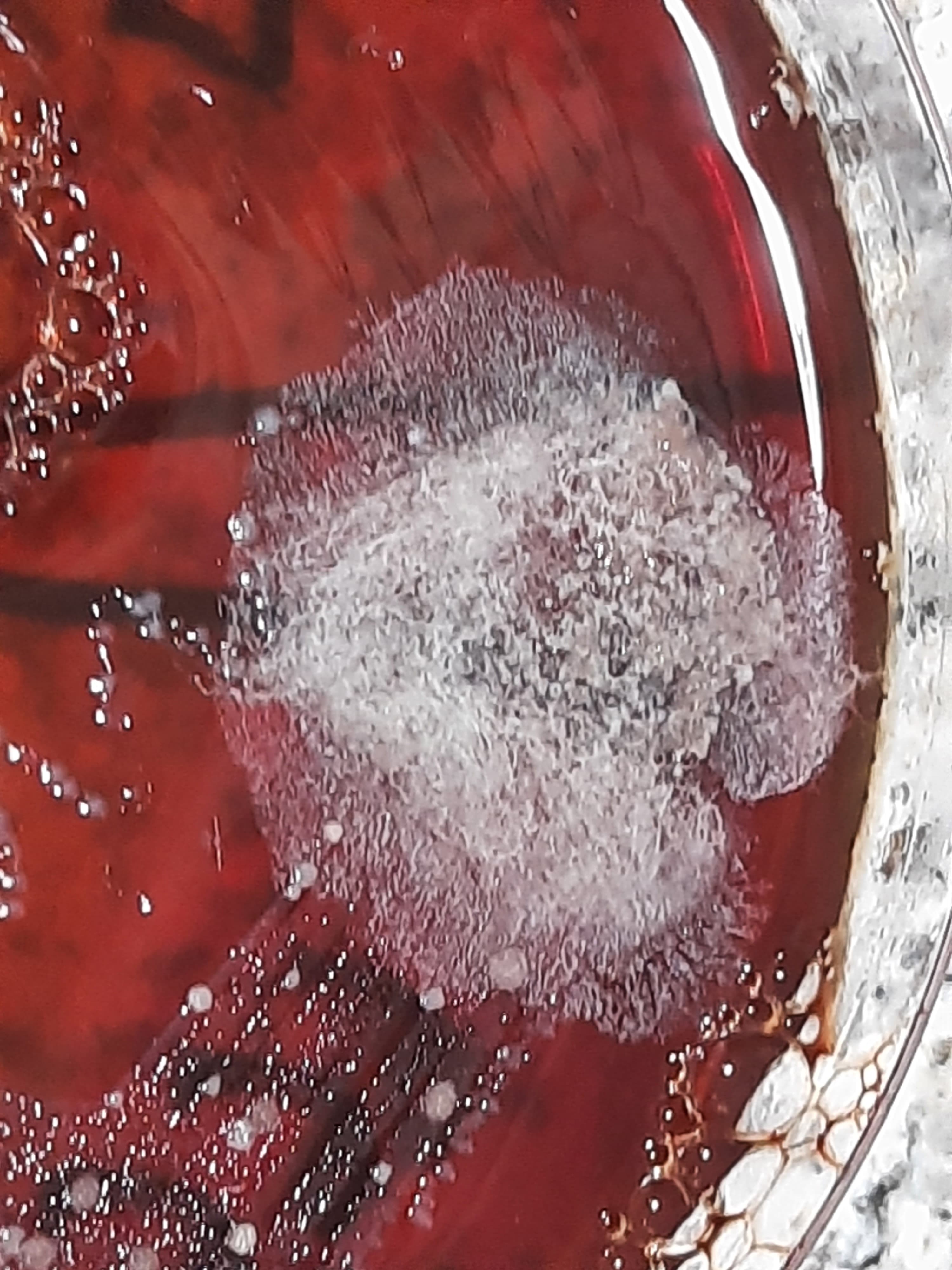
Mucor is the Latin word for mold. When Pliny the Elder catalogued the natural world in the first century AD, mucor was the word Romans used for the fuzzy decay that appeared on damp bread, on rotting wood, on anything left wet and unattended. It shares a root with mucus, the Proto-Indo-European *meug-, meaning slippery or slimy. In 1832, a Swedish priest and mycologist named Elias Magnus Fries took this ancient word for household rot and made it the formal scientific name of an entire order of fungi. The Romans' kitchen word had become a taxonomic designation. It would soon become something else entirely: the name on a pathology report that makes infectious disease physicians move faster than almost any other.
Historical scene
Elias Magnus Fries was born in 1794 in the Swedish province of Smaaland, the son of a Lutheran pastor. He studied botany at Lund University, where he developed the organizing obsession that would define his career: fungi were chaos, and someone needed to sort them. In 1821, at age 27, he published the first volume of Systema Mycologicum, which would grow to three volumes by 1832 and become the foundational classification system for all fungi. Fries was not the first to describe molds. But he was the first to impose a system on them that other scientists could use, and his system stuck.
What happened
In volume 3 of Systema Mycologicum, published in 1832, Fries established the order Mucorales. The taxonomic criteria were morphological: coenocytic hyphae that lacked septa, sporangiophores topped with columellae inside sporangia, and the production of zygospores through sexual reproduction. These are features visible under a basic dissecting microscope. Fries did not need electron microscopy or molecular phylogenetics. He used a hand lens and his own eyes.
The name he chose was not invented. It was inherited. Mucor had been in the Latin lexicon for at least eighteen centuries. The Roman agricultural writer Columella mentioned it. Pliny mentioned it. The word never needed translation because its meaning never changed: something wet, unpleasant, and growing where it should not.
For half a century after Fries, the Mucorales were botanical curiosities. They appeared on bread and fruit and were discussed in mycology journals. Then, in 1885, the Austrian pathologist Arnold Paltauf published a paper describing a cancer patient who had developed a rapidly progressive infection of the lungs, pleura, and mediastinum. The tissue sections showed broad, ribbon-like, non-septate hyphae penetrating blood vessel walls. Paltauf called it Mycosis mucorina, the mucor infection. It was the first clinical description of mucormycosis. Fries' taxonomic order now had a disease to go with it, and the disease was lethal.
Why it changed infectious diseases
Paltauf's paper established a clinical entity. Over the next century, case reports accumulated, each adding a piece of the clinical picture. By the 1940s, reports of rhino-orbital-cerebral mucormycosis in diabetic patients had established the classic triad: ketoacidosis, facial pain with black necrotic eschar, and rapid intracranial extension. Histological studies confirmed the pathophysiology: angioinvasion. The broad, non-septate hyphae invade arterial walls, causing thrombosis and tissue infarction. The necrosis is not from the fungus directly damaging tissue. It is from the fungus cutting off the blood supply.
This mechanism explains the clinical urgency. Bacteria cause inflammation. Mucorales cause dead tissue. Dead tissue cannot be salvaged with antimicrobials alone. It must be cut out. The standard of care, lipid amphotericin B combined with aggressive surgical debridement, reflects this reality. The antifungal kills the organism at the margin of viable tissue. The scalpel removes what the organism has already destroyed.
Why the word still matters now
Rhizopus arrhizus (formerly R. oryzae) is the most common cause of mucormycosis worldwide. Lichtheimia (formerly Absidia) species are next. Both are environmental molds found in soil, decaying vegetation, and stale bread. Both produce spores light enough to aerosolize. In a neutropenic patient or a patient with DKA, the spores lodge in the nasal turbinates or the pulmonary alveoli and the disease begins. The immunology of mucormycosis is specific and actionable: the ketoacidotic environment impairs phagocyte function and provides free iron, both of which Mucorales exploit. This is why DKA is the single strongest risk factor, why iron overload states such as deferoxamine therapy are also a risk, and why correcting the metabolic environment is as urgent as starting the antifungal.
The 2021 COVID-19-associated mucormycosis epidemic in India, with thousands of cases overwhelming hospitals during the delta wave, reminded the global medical community that mucormycosis is not rare everywhere. In India, the background incidence is approximately 140 cases per million population, about 80 times higher than in developed countries. The combination of uncontrolled diabetes, corticosteroid use for severe COVID-19, and environmental exposure created a perfect storm. The word mucor appeared in newspaper headlines for the first time in two millennia. The Romans' kitchen word had become international news.
Two thousand years separate Pliny writing about mold on bread from an ID fellow ordering liposomal amphotericin B for a patient with a black palate. Same word. Same meaning. The only difference is that we now know what happens when the mold gets inside.
References
Fries EM. Systema Mycologicum, Sistens Fungorum Ordines, Genera et Species. Vol. 3. Gryphiswaldiae: Sumtibus Ernesti Mauritii; 1832. pp. 296-353.
Glare PGW, ed. Oxford Latin Dictionary. Oxford: Oxford University Press; 1982. Entry: "mucor."
Paltauf A. Mycosis mucorina: Ein Beitrag zur Kenntniss der menschlichen Fadenpilzerkrankungen. Virchows Arch Pathol Anat Physiol Klin Med. 1885;102(3):543-564.
Spellberg B, Edwards J Jr, Ibrahim A. Novel perspectives on mucormycosis: pathophysiology, presentation, and management. Clin Microbiol Rev. 2005;18(3):556-569.
Prakash H, Chakrabarti A. Global epidemiology of mucormycosis. J Fungi. 2019;5(1):26.