HistorID
The Stain That Made Bacteria Stand Out
Before the Gram stain split bacteria into positive and negative, it solved a more basic problem: how do you make tiny cocci stand out in a lung full of exudate?
Gram's stain began as a visibility trick in pneumonia pathology. It turned into one of medicine's fastest first questions at the bedside: what color are the bacteria?
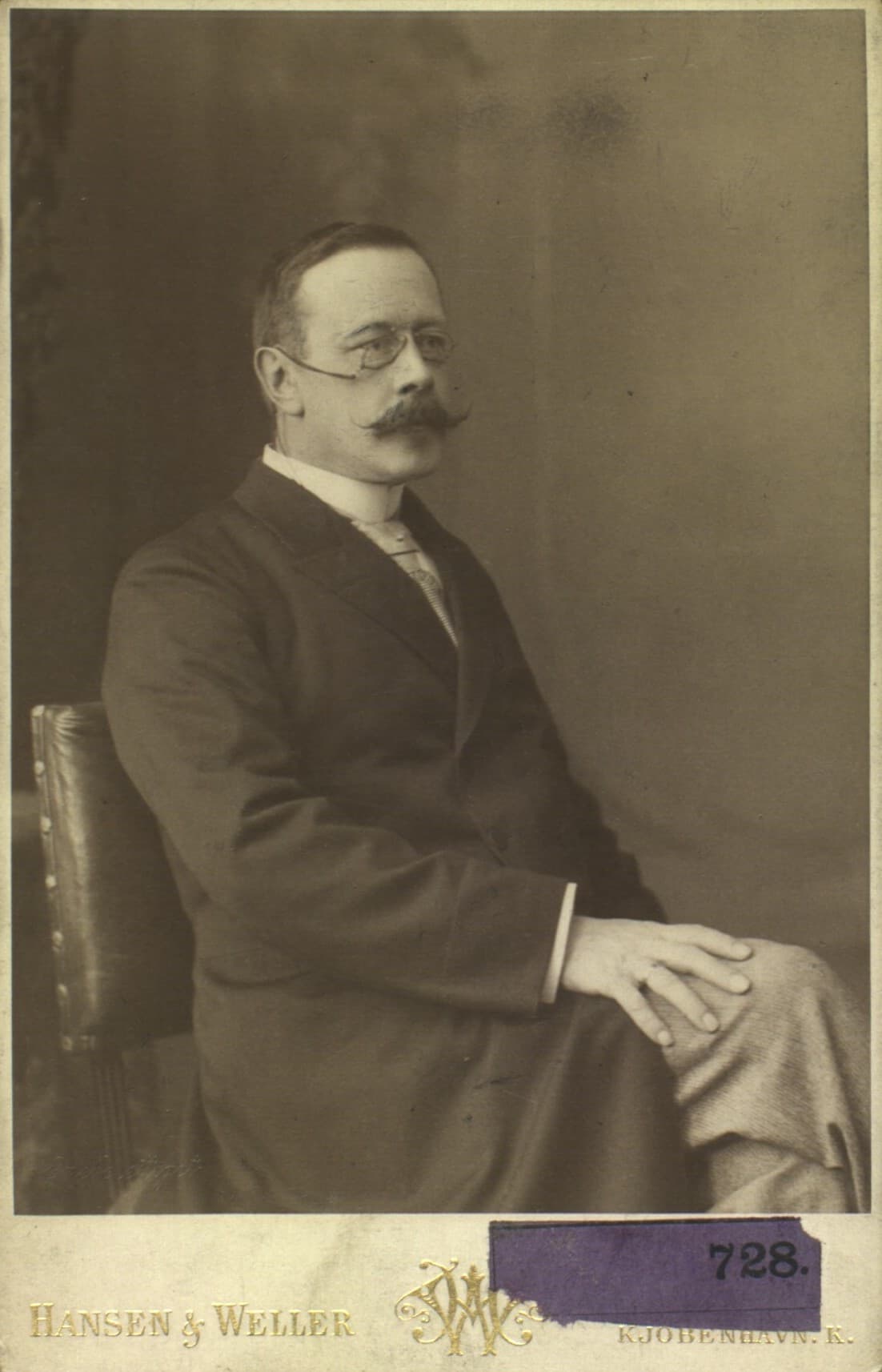
The Gram stain is so familiar now that it can feel like part of the wallpaper of medicine. Purple here, pink there, then on to the real work. But in 1884 the problem was much cruder. Hans Christian Gram was trying to find tiny cocci in pneumonia tissue, and in ordinary preparations, he said, they were impossible to see because the exudate swallowed everything.
Historical scene
Bacteriology was still young. Koch's postulates had raised the stakes: if a microbe caused a disease, you had to show it there, in the lesion, not just talk around it. Gram was working in Berlin with Carl Friedlander, studying lungs from people who had died of pneumonia and from experimental animals. The challenge was not subtle. The organisms were tiny, the tissue was busy, and the microscope needed help.
What happened
Gram's paper in 1884 was not written like a man announcing a revolution. It reads more like a practical note from somebody who had found a better way to make bacteria stand out. He described a procedure in which the cocci stained strongly while nuclei and other tissue elements stayed much paler. The recipe mattered. Gram used Ehrlich's aniline gentian violet, then iodine and potassium iodide, and then absolute alcohol to wash the slide back. That was the win. Suddenly the organisms were easier to locate in sections where they had previously been buried in inflammatory debris.
The broader split came into view as he kept trying the method on other organisms. Some held the stain. Some gave it up easily in alcohol. Gram himself was almost comically restrained about it. He wrote that he was publishing the method even though the results were brief and full of gaps, and that he only hoped it would prove useful in other hands. It did.
Why it changed infectious diseases
What changed ID was speed. A stained slide could now give an early shape to the pathogen before culture had finished doing its slower work. Cocci or rods. Purple or decolorized. Later, those reactions would be tied to real structural differences in bacterial membranes and walls, but at the start the method earned its place because it made the organisms visible and sortable. That was enough to sharpen diagnosis and, eventually, empiric treatment thinking.
Why it still matters now
Modern microbiology has faster and fancier tools, but the Gram stain still survives because it is one of the quickest useful looks we have. It can turn a cloudy CSF, a positive blood culture, or a sputum sample into an immediate clinical clue. The vocabulary is so ingrained that people forget it began in a morgue, in a search for pneumonia cocci hidden in lung tissue. That is what keeps the story alive for me. A method born from a visibility problem still shapes first-pass decisions at the bedside.
References
Gram HC. Ueber die isolirte Färbung der Schizomyceten in Schnitt- und Trockenpräparaten. Fortschr Med. 1884;2:185-189. Historical translation and commentary excerpted in the archived "Pioneers in Medical Laboratory Science" page.
Encyclopaedia Britannica. Gram stain. Overview of the method, date, and the later interpretation of Gram-positive and Gram-negative cell wall differences.
Wikimedia Commons. Hans Christian Gram portrait by Hansen & Weller.