HistorID
The Red Fog Over San Francisco
The U.S. military collected a bacterium that makes colonies the color of fresh blood and pumped it into the air two miles off the coast of San Francisco. For six days in September 1950, a Navy minesweeper circled the Golden Gate while the wind carried a cloud of Serratia marcescens across the city. Within two weeks, an infection so rare that Stanford doctors had virtually never seen it before appeared in eleven patients. One of them died. The military had chosen Serratia because it was easy to spot on a plate and because, at the time, everyone agreed it could not make people sick. Both assumptions were correct. The third assumption was not.
Operation Sea-Spray was a secret 1950 Navy biological warfare simulation. Serratia marcescens was selected for its bright red pigment, which makes its colonies unmistakable on agar. The military also believed Serratia did not cause human disease. Eleven patients at Stanford Hospital developed Serratia infections shortly after the spraying, and Edward Nevin, a 75-year-old retired utility worker, died of Serratia endocarditis. The experiment stayed secret for 27 years. In 1977, Senate hearings disclosed that the military had conducted 239 open-air biological tests over American cities between 1949 and 1969. Nevin's family sued all the way to the Supreme Court and lost because they could not conclusively trace the bacteria that killed him to the Navy's ship.
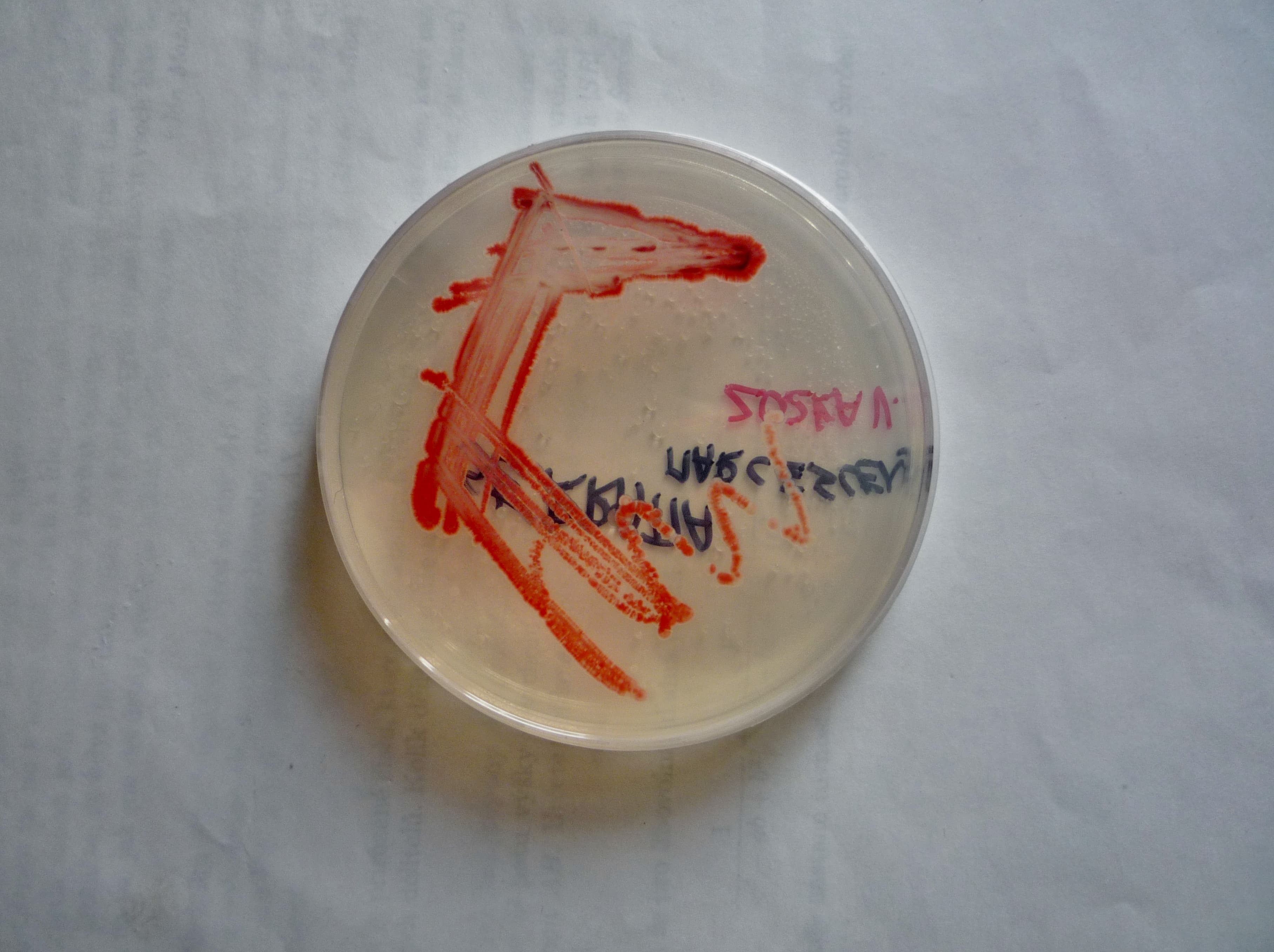
The U.S. military collected a bacterium that makes colonies the color of fresh blood and pumped it into the air two miles off the coast of San Francisco. For six days in September 1950, a Navy minesweeper circled the Golden Gate while the wind carried a cloud of Serratia marcescens across the city. The ship's crew operated spray equipment on deck. On shore, the Army set up monitoring stations at 43 locations to measure where the cloud landed. They got their answer: the bacteria blanketed a semicircle reaching Sausalito to the north, the East Bay suburbs to the east, and Colma to the south. Nearly every one of San Francisco's 800,000 residents inhaled at least 5,000 particles. The test worked.
Historical scene
World War II had ended five years earlier, and the Cold War was tightening. U.S. military planners needed to know: if an enemy approached a coastal city by ship and released a pathogen into the onshore wind, how far would it travel? How many people would inhale enough to get sick? No one had measured this before. The biological weapons program at Fort Detrick, Maryland, had a list of candidate simulants for open-air testing. Serratia marcescens was high on the list for two reasons. First, its colonies glow a vivid red on agar, the result of a pigment called prodigiosin. That meant researchers could streak environmental samples onto plates and know within hours where their spray had settled. Second, medical textbooks at the time classified Serratia as a harmless saprophyte, a microbe that lived in soil and water and occasionally turned stale bread red. It was not considered a human pathogen. The military called the test Operation Sea-Spray.
What happened
On October 11, 1950, roughly two weeks after the spraying ended, eleven patients walked into the old Stanford University Hospital in San Francisco with unusual urinary tract infections. The cultures grew red colonies. The organism was Serratia marcescens. The outbreak was so anomalous that the Stanford physicians investigated it extensively, trying to figure out how a bacterium considered harmless had caused a cluster of invasive infections in a single hospital. Ten patients recovered after treatment. One did not. Edward J. Nevin III, a 75-year-old retired Pacific Gas and Electric worker, was recovering from prostate surgery when Serratia reached his heart valves. He died in November 1950 of bacterial endocarditis.
The Stanford doctors published the cluster as the first documented outbreak of Serratia marcescens infection in humans. They had no way of knowing that a Navy ship had sprayed billions of the same organism over their city a few weeks earlier. No military official had notified the city's health department. No civilian doctor had been warned.
The secret held for a generation. In 1976, the San Francisco Chronicle science writer David Perlman reported on a series of declassified documents revealing that the Army had conducted biological warfare tests over populated American cities. The following year, the U.S. Senate Subcommittee on Health and Scientific Research held hearings. Army officials disclosed that between 1949 and 1969, they had run 239 open-air tests with live bacteria or inert simulants over cities including San Francisco, New York, Washington, D.C., and locations along the Pennsylvania Turnpike. In New York, military researchers dropped lightbulbs filled with bacteria onto subway tracks in 1966. At Washington's National Airport, passengers were exposed during a mock attack and traveled to 39 cities before the bacteria were detected.
In 1981, Nevin's surviving family sued the federal government for negligence. They argued that the Navy had caused Edward Nevin's death by blanketing the city with an organism it had failed to understand. The case worked its way to the U.S. Supreme Court. The court declined to hear it, letting stand a lower court ruling that the family could not prove the specific bacteria that killed Nevin came from the Navy's ship, as opposed to another environmental source.
Why it changed infectious diseases
Before Operation Sea-Spray, Serratia marcescens was a microbiological curiosity. After the spraying and the subsequent outbreak, it became something else. The Stanford cluster alerted the medical community that an organism widely considered nonpathogenic could, under the right conditions, cause invasive disease. Over the following decades, Serratia established itself as a significant nosocomial pathogen, particularly in intensive care units and among immunocompromised patients. By 2001, a compounding pharmacy in Walnut Creek, California, would contaminate spinal injections with Serratia, killing three people and hospitalizing ten. By 2004, contamination with the same organism would force Chiron Corporation to discard its entire U.S. flu vaccine supply.
The broader change was in the oversight of human subjects research. The 1977 Senate hearings, combined with the revelations of the Tuskegee syphilis study in 1972, drove the formalization of informed consent and institutional review requirements for government-funded research. The notion that the military could spray bacteria over a civilian population without notification became legally and ethically untenable.
Why the red fog still matters now
Every time an ID physician treats a Serratia marcescens bloodstream infection in an ICU patient, the organism on the plate is a descendant of the same species that drifted over San Francisco in 1950. Some microbiologists believe the Operation Sea-Spray spraying permanently altered the Bay Area's microbial ecology, introducing a strain that established itself in the local environment and continues to cause infections today. The hypothesis is difficult to prove without genomic comparison between the 1950 military strain and contemporary clinical isolates. But the idea that a single secret experiment could change the microbiology of a metropolitan region for decades is not a fringe position among infectious disease epidemiologists who have studied the event.
The story holds a narrower lesson too. Serratia marcescens was picked for a weapons test because it was colorful and thought harmless. The color made it traceable. The harmlessness was a provisional judgment, not a fact, and it was wrong. That pattern of mistaking tractability for safety has recurred in microbiology. Every time a lab synthesizes a novel pathogen or a research team enhances a virus for gain-of-function study, the same calculus is being performed: we need something we can track, and we believe it will not cause harm. The red fog over San Francisco is what happens when the second half of that equation is wrong.
References
Cole LA. Clouds of Secrecy: The Army's Germ Warfare Tests Over Populated Areas. Rowman and Littlefield; 1988:75-84.
Wheat RP, Zuckerman A, Rantz LA. Infection due to chromobacteria: report of eleven cases. AMA Arch Intern Med. 1951;88(4):461-466.
U.S. Senate, Subcommittee on Health and Scientific Research, Committee on Human Resources. Biological Testing Involving Human Subjects by the Department of Defense. 95th Congress, 1st Session. Washington, DC: U.S. Government Printing Office; 1977.
Regis E. The Biology of Doom: America's Secret Germ Warfare Project. Diane Publishing; 1999.
Tansey B. Serratia has dark history in region: Army test in 1950 may have changed microbial ecology. San Francisco Chronicle. October 31, 2004.