HistorID
The Medical Student Who Became the Experiment
A Peruvian medical student did not just study a disease. He inoculated himself with it, kept notes as the fever took hold, and settled one of the central questions in Andean medicine with his own body.
Carrion's case binds microbiology, clinical observation, and risk into one brutal lesson: diagnostic clarity was won through a form of self-experimentation medicine would no longer accept.
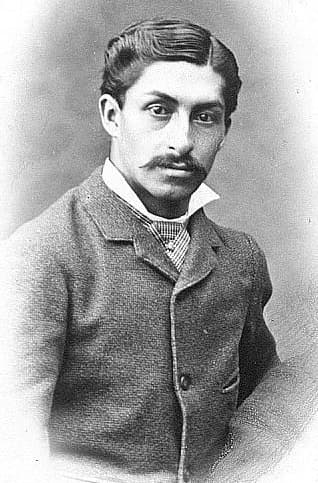
In Lima in 1885, Daniel Alcides Carrion was still a medical student, not an established physician or laboratory celebrity. What drew him into history was a question that had not yet been settled: was the violent febrile anemia known as Oroya fever actually related to the later eruptive skin disease called verruga peruana, or were they separate illnesses that only happened to share a geography? Carrion decided to answer that question by turning himself into the experiment.
Historical scene
The disease belonged to the Andes. Railroad workers in Peru had already given Oroya fever a grim reputation, and the later eruptive lesions of verruga peruana were well known locally. What was missing was the link. This was late-19th-century medicine, a moment when careful bedside description, pathology, and bold inference still sat much closer together than they do now. If you wanted proof, you sometimes had to create it.
What happened
Carrion arranged to have material from a patient's verruga lesion inoculated into himself. For a short time, nothing dramatic happened. Then fever, malaise, and progressive illness set in. He developed the syndrome recognized as the acute phase of the disease and continued to document it until he became too ill to do so. He died weeks later. The experiment gave the medical community something it had not had before: a human bridge between the eruptive phase and the acute blood-borne illness.
Why it changed infectious diseases
The importance of the story is not just that it was dramatic. It helped consolidate the idea that Oroya fever and verruga peruana belonged to the same disease spectrum, what would later be called Carrion's disease. That mattered clinically because it turned scattered observations into one pathogen-centered story: one infection, different phases, different presentations, one epidemiology. Long before Bartonella bacilliformis was fully characterized, the clinical logic was already tightening around a single organism.
Why the case still unsettles
Carrion's experiment is unforgettable for two reasons. Diseases often look unrelated until someone tracks timing and phase carefully, and medicine has a long tradition of discovery through acts that read very differently once the heroism wears off. The case is sharp clinical reasoning wrapped in a method we would now reject.
References
Gomes C, Ruiz J. Carrion's disease: the sound of silence. Clin Microbiol Rev. 2018;31(1):e00056-17.
Maguina C, Garcia PJ, Gotuzzo E, Cordero L, Spach DH. Bartonellosis (Carrion's disease) in the modern era. Clin Infect Dis. 2001;33(6):772-779.
Altman LK. Who Goes First? The Story of Self-Experimentation in Medicine. University of California Press; 1987.