HistorID
The Man Who Made the Canal Possible
The canal had engineers, explosives, and political backing. What it did not have, at first, was a way to stop mosquitoes from killing the workforce faster than the excavation could move.
Panama showed that public works and infectious-disease control can be the same project. Without vector control, the canal was a medical problem before it was an engineering one.
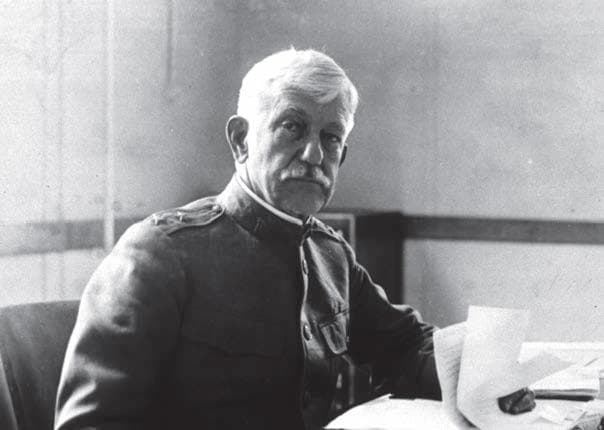
The Panama Canal is often remembered as a feat of engineering, but that version skips the real opening move. Before locks, excavation, and logistics could succeed, the Canal Zone had to stop functioning as a machine for producing yellow fever and malaria. Workers were not just facing mud, heat, and landslides. They were entering one of the most efficient transmission settings imaginable.
Historical scene
The French effort in Panama had already shown what happens when disease control fails in the tropics. Thousands of workers fell ill, and yellow fever in particular carried a terrifying reputation because it seemed to strike unpredictably and kill decisively. By the time William C. Gorgas arrived under U.S. authority, the scientific groundwork had changed. Mosquito transmission was no longer just speculation. The question was whether that knowledge could be turned into daily operational control.
What happened
Gorgas and his teams attacked the mosquito habitat with the same seriousness that engineers brought to rock and earth. Standing water was drained or treated, homes and wards were screened, breeding sites were hunted, and fumigation became routine. The result was not just a cleaner zone. It was a transformed epidemiology. Yellow fever transmission was interrupted, and the workforce could function at a scale that had previously looked impossible.
Why it changed infectious diseases
Panama helped make vector control look like serious statecraft instead of local sanitation. It was a visible demonstration that transmission ecology could be manipulated, and that doing so could determine whether a massive geopolitical project lived or died. In ID terms, the lesson was simple and huge at the same time: if you understand the vector, the breeding habitat, and the chain of exposure, you can change outcomes before the patient ever becomes a case.
Why infrastructure is still medicine
Panama keeps public health from looking ornamental. Mosquito control is easy to underrate when it works and impossible to ignore when it fails. The canal is a reminder that infrastructure, water management, and disease prevention often sit inside the same system. In vector-borne disease, the environment is often the intervention.
References
McCullough D. The Path Between the Seas. Simon & Schuster; 1977.
William C. Gorgas. Encyclopaedia and archival biographical sources.
Health measures during the construction of the Panama Canal. Historical public-health archives.