HistorID
The Man Behind cruzi
Carlos Chagas gave a new parasite Oswaldo Cruz's name, but that tribute only makes sense if you know the Rio physician who fought mosquitoes, rats, smallpox, and public rage at the same time.
Oswaldo Cruz still matters because he treated epidemics as systems: vectors, housing, ports, laboratories, vaccines, politics, and trust all had to be handled together.
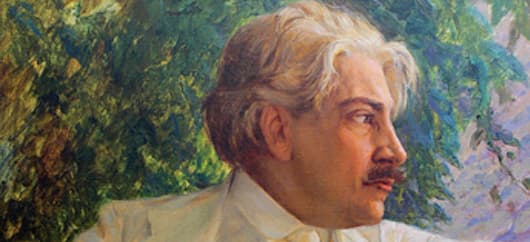
In the Carlos Chagas HistorID story, one name passed by quickly. Chagas found a new parasite in a wall-dwelling bug and called it Trypanosoma cruzi. The name was not decorative. It was a salute to Oswaldo Cruz, the Brazilian physician who had already made infectious diseases a public fight in Rio de Janeiro.
Historical scene
At the start of the 20th century, Rio was a capital city with a port problem, a mosquito problem, a rat problem, and a trust problem. Yellow fever frightened travelers and damaged commerce. Plague brought attention to rats and fleas. Smallpox still moved through the city. Cruz, trained in the Pasteurian world of microbes and laboratories, was asked to make public health work in streets where people did not always welcome inspectors at the door.
What happened
Cruz became Brazil's director of public health in 1903 and pushed campaigns that treated infection as something built into the city itself. Yellow fever control meant attacking Aedes aegypti breeding sites. Plague control meant rats, sanitation, and the port. For smallpox, the state leaned on vaccination, and the pressure helped ignite the 1904 Vaccine Revolt. Cruz was not fighting a single organism in a quiet laboratory. He was trying to move laboratory logic into alleys, homes, ships, and newspapers.
Why it changed infectious diseases
Cruz helped make tropical medicine in Brazil practical. The point was not only to identify a microbe under glass. The harder task was to connect the microbe to insects, animals, housing, city services, and public action. That is the world Chagas later worked in at Manguinhos and in the field. When Chagas named T. cruzi for Cruz, he was naming a scientific lineage as much as a mentor.
Why it still matters now
Cruz's story feels current because outbreak control still breaks when biology and public trust are treated as separate problems. Vector control depends on households, water storage, waste, surveillance, and follow-through. Vaccination depends on confidence as well as supply. Chagas gave Cruz's name to a parasite. Infectious diseases kept Cruz's larger lesson: knowing the pathogen is only the beginning of control.
References
Fundacao Oswaldo Cruz. Quem foi Oswaldo Cruz.
Hochman G. Vaccination, smallpox, and a culture of immunization in Brazil. Cien Saude Colet. 2011;16(2):375-386.
Centers for Disease Control and Prevention. About Yellow Fever. Updated 2024.
World Health Organization. Yellow fever. Fact sheet. Updated 2025.