HistorID
The Little Sprinkler
Pier Antonio Micheli was a priest who spent his mornings at Mass and his afternoons at the microscope. In 1729, while examining a mold he had collected, he noticed that the structure holding its spores, a swollen tip with chains radiating outward, looked exactly like the perforated metal wand he used to sprinkle holy water on the congregation. He wrote down the name Aspergillus, from the Latin for 'little sprinkler.' Three centuries later, every infectious disease physician in the world still uses it.
The genus Aspergillus was named in 1729 by Pier Antonio Micheli, a Catholic priest and botanist in Florence. He chose the name because the conidial head of the mold, with its radiating chains of spores, resembled an aspergillum, the liturgical instrument used to sprinkle holy water during Mass. The Latin root is aspergere, 'to sprinkle.' Micheli's Nova Plantarum Genera became the foundational text of scientific mycology. He was also the first to demonstrate that fungi reproduce by spores, falsifying the prevailing belief in spontaneous generation. The genus now contains approximately 250 species and includes the most clinically important molds in human medicine.
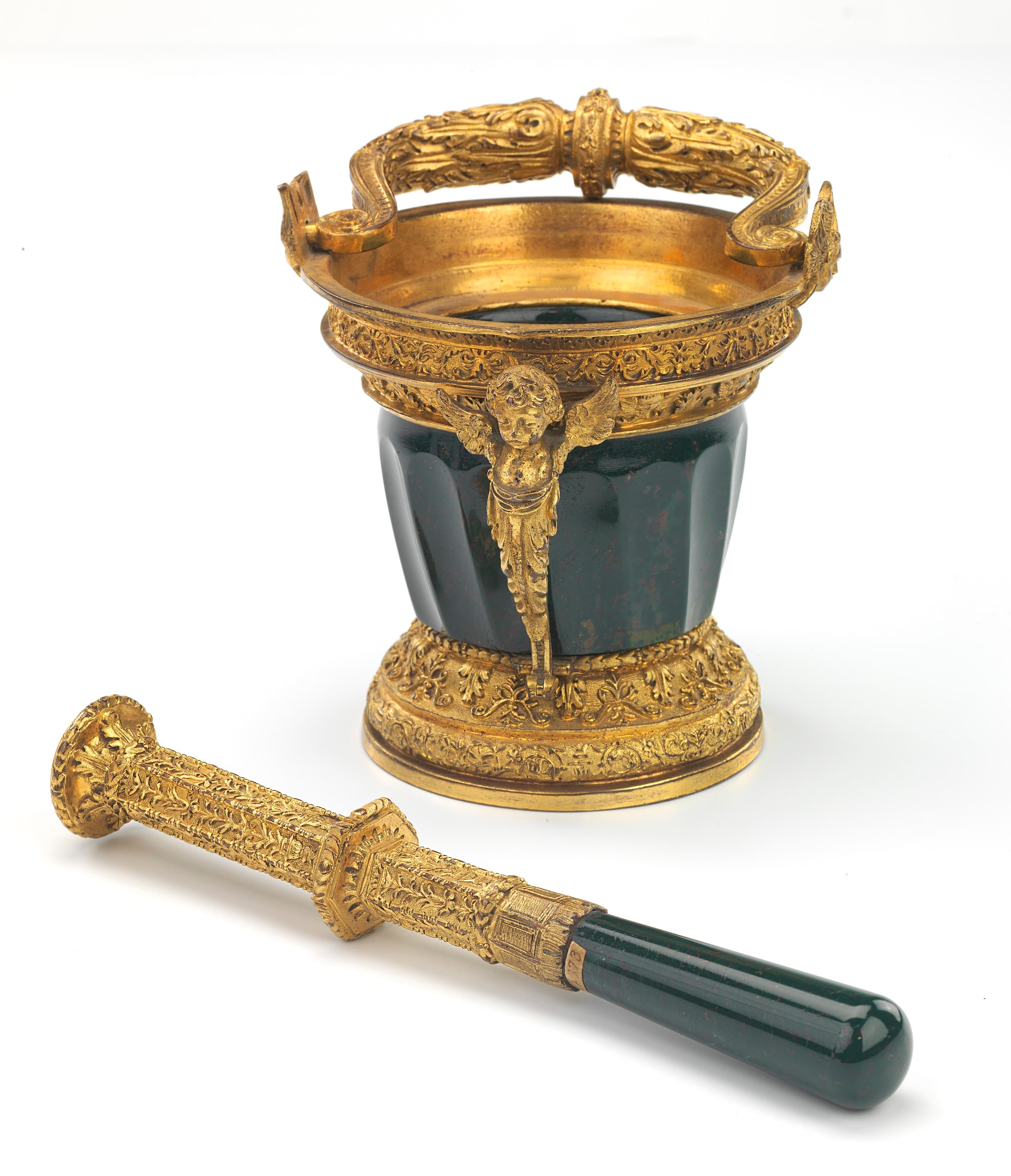
Pier Antonio Micheli was a priest who spent his mornings at Mass and his afternoons at the microscope. In 1729, while examining a mold he had collected, he noticed that the structure holding its spores, a swollen tip with chains radiating outward, looked exactly like the perforated metal wand he used to sprinkle holy water on the congregation. He wrote down the name Aspergillus, from the Latin for "little sprinkler." Three centuries later, every infectious disease physician in the world still uses it.
Historical scene
Micheli worked at the Botanical Garden of Florence, the Giardino dei Semplici, which he directed from 1706 until his death in 1737. He was not a physician. He was a priest and a botanist living in a city that had produced Galileo and was still in the grip of the scientific revolution. His tools were modest: a compound microscope, dissection needles, and glass slides. His specimens came from the garden, the Tuscan countryside, and shipments from correspondents across Europe. What set Micheli apart was his conviction that fungi deserved the same systematic study as plants. Most naturalists of the period treated molds and mushrooms as curiosities or vegetables of uncertain origin. Micheli treated them as organisms with reproducible structures.
What happened
In 1729, Micheli published Nova Plantarum Genera juxta Tournefortii methodum disposita, a folio volume printed in Florence by Bernardo Paperini. The book described approximately 1,900 species of plants, fungi, and lichens, including 900 that were new to science. Among the fungal genera he named were Aspergillus, Botrytis, and Mucor, all still in use today.
The name Aspergillus was explicitly visual. The conidial head of the mold, a swollen vesicle from which chains of spores radiate like the spokes of a wheel, reminded Micheli of an aspergillum, the liturgical instrument used by Catholic priests to sprinkle holy water during the Asperges rite at the beginning of Mass. The word aspergillum itself comes from the Latin verb aspergere, meaning "to sprinkle" or "to scatter." Aspergillus, with its diminutive ending, literally means "little sprinkler."
Micheli did more than name things. He was the first person to demonstrate experimentally that fungi reproduce by spores. He collected fungal material, placed spores on freshly cut slices of melon and quince, and observed under his microscope that they germinated and produced new fungal growth of the same species. In a period when most scholars believed fungi arose from spontaneous generation, putrefaction, or lightning strikes, Micheli showed they came from other fungi. His experiments were simple and reproducible. His interpretation was correct.
Why it changed infectious diseases
Micheli's work founded scientific mycology, the discipline that would eventually identify fungi as agents of human disease. When Aspergillus fumigatus was first linked to human pulmonary infection by the German physician Rudolf Virchow in 1856, the genus name was already available because a priest had established it 127 years earlier. Micheli did not know that his little sprinkler would become one of the most clinically significant genera in medicine. He was simply drawing what he saw and naming it honestly.
Today, the genus Aspergillus contains approximately 250 species. A. fumigatus is the most common airborne fungal pathogen in humans, causing invasive aspergillosis in neutropenic patients, hematopoietic stem cell transplant recipients, and solid organ transplant recipients with mortality rates that can exceed 50% despite antifungal therapy. A. flavus and A. parasiticus produce aflatoxins, the most potent naturally occurring carcinogens known, linked to hepatocellular carcinoma in regions with high dietary exposure. A. terreus is intrinsically resistant to amphotericin B. A. niger causes otomycosis and is a common laboratory contaminant that clinicians must distinguish from true infection. All of these species share the microscopic morphology that reminded Micheli of a liturgical instrument, and all carry the name he invented.
Why the name still matters now
The word Aspergillus is a fossil from an 18th-century Mass. It preserves a specific visual moment: a priest in Florence, having finished his morning prayers, sitting down at his microscope and connecting the shape he saw there to the object he had just held in his hands. The name carries no clinical information. It tells you nothing about galactomannan, or voriconazole troughs, or triazole resistance conferred by CYP51A mutations, or the reason an ID fellow is ordering a BAL on a neutropenic patient with a halo sign on CT. What it carries is a way of looking at the natural world shared between a botanist and a liturgist, a scientist and a priest, a man who used the same eyes to study molds and to say Mass. In 1729, that was not a contradiction. It was the same man at the same desk, and the name he wrote down is still on the lab report.
References
Micheli PA. Nova Plantarum Genera juxta Tournefortii methodum disposita. Florence: Typis Bernardi Paperinii; 1729.
Ainsworth GC. Introduction to the History of Mycology. Cambridge: Cambridge University Press; 1976. pp. 33-45.
Ainsworth GC, Bisby GR. Ainsworth and Bisby's Dictionary of the Fungi. 10th ed. Wallingford: CAB International; 2008. Entry for Aspergillus.
Hawksworth DL. Pier Antonio Micheli (1679-1737): the founder of mycology. Mycologist. 1991;5(1):6-10.