HistorID
The Doctor Who Found a Disease in the Walls
Carlos Chagas was not chasing a famous epidemic. He was following a bug that lived in the cracks of rural walls, and it led him to one of infectious diseases' strangest discoveries.
The Chagas story still matters because it joined entomology, parasitology, and bedside medicine in one chain of transmission, then left behind a chronic infection that can stay quiet for years before it reaches the heart.
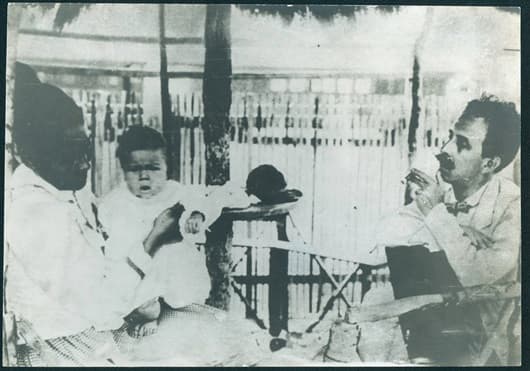
In 1909, Carlos Chagas was working in Lassance, a rail town in Minas Gerais, when reports of night-biting insects in mud-walled houses caught his attention. What looked like a local nuisance became something much bigger. From one wall-dwelling bug, Chagas worked outward to a new parasite, a human infection, and eventually a disease that would carry his name.
Historical scene
Brazil was still building tropical medicine in the field, not only in the lecture hall. Lassance was tied to railroad expansion, rural poverty, and housing that made insect exposure routine. Triatomine bugs, known locally as barbeiros, hid in wall cracks by day and fed by night. Chagas was doing the kind of medicine that required a microscope, long travel, and close attention to how people actually lived.
What happened
Chagas examined the insect and found a previously undescribed trypanosome, which he named Trypanosoma cruzi in honor of Oswaldo Cruz. Then, on April 14, 1909, he identified the parasite in the blood of a child in Lassance named Berenice and announced a new human disease. The striking part was the sequence. He did not start with a textbook syndrome and work backward. He moved from vector to parasite to patient and stitched the whole story together.
Why it changed infectious diseases
This was a rare moment when vector biology, clinical observation, and parasitology all locked into place at once. Chagas disease showed that understanding where an insect lives and how it feeds can matter as much as describing what happens after infection. It also widened the ID imagination: a tropical infection could begin in a wall crack, pass quietly through blood and tissue, and declare itself years later as cardiomyopathy or digestive disease.
Why it still matters now
Chagas disease never stayed in 1909. Millions of people still live with T. cruzi infection, many without knowing it, and migration turned a rural Latin American disease into a problem that shows up in cardiology clinics, blood-bank screening, transplant programs, and pregnancy care far from Lassance. About 20-30% of infected people develop serious chronic complications, especially cardiac disease. If the exposure story is missed early, the diagnosis may not appear until decades later.
References
Lewinsohn R. Carlos Chagas (1879-1934): the discovery of Trypanosoma cruzi and of American trypanosomiasis (foot-notes to the history of Chagas's disease). Trans R Soc Trop Med Hyg. 1979;73(5):513-523.
Casa de Oswaldo Cruz / Fiocruz. Animation about Carlos Chagas gets an English version. 2020.
Perez-Molina JA, Molina I. Chagas disease. Lancet. 2018;391(10115):82-94.
Centers for Disease Control and Prevention. About Chagas disease. Updated 2024.