HistorID
The Capsule That Wasn't There
In 1905, a pathologist at the Panama Canal was studying why workers kept dying of fevers. He opened an autopsy, looked through his microscope, and saw organisms he had never seen before. He gave them a name that got two things wrong.
Histoplasma capsulatum is not a protozoan and has no true capsule. The name preserves a double mistake that has survived for more than a century. That is not a flaw in the name. It is a reminder that what you see under a microscope and what you are actually looking at are not always the same thing.
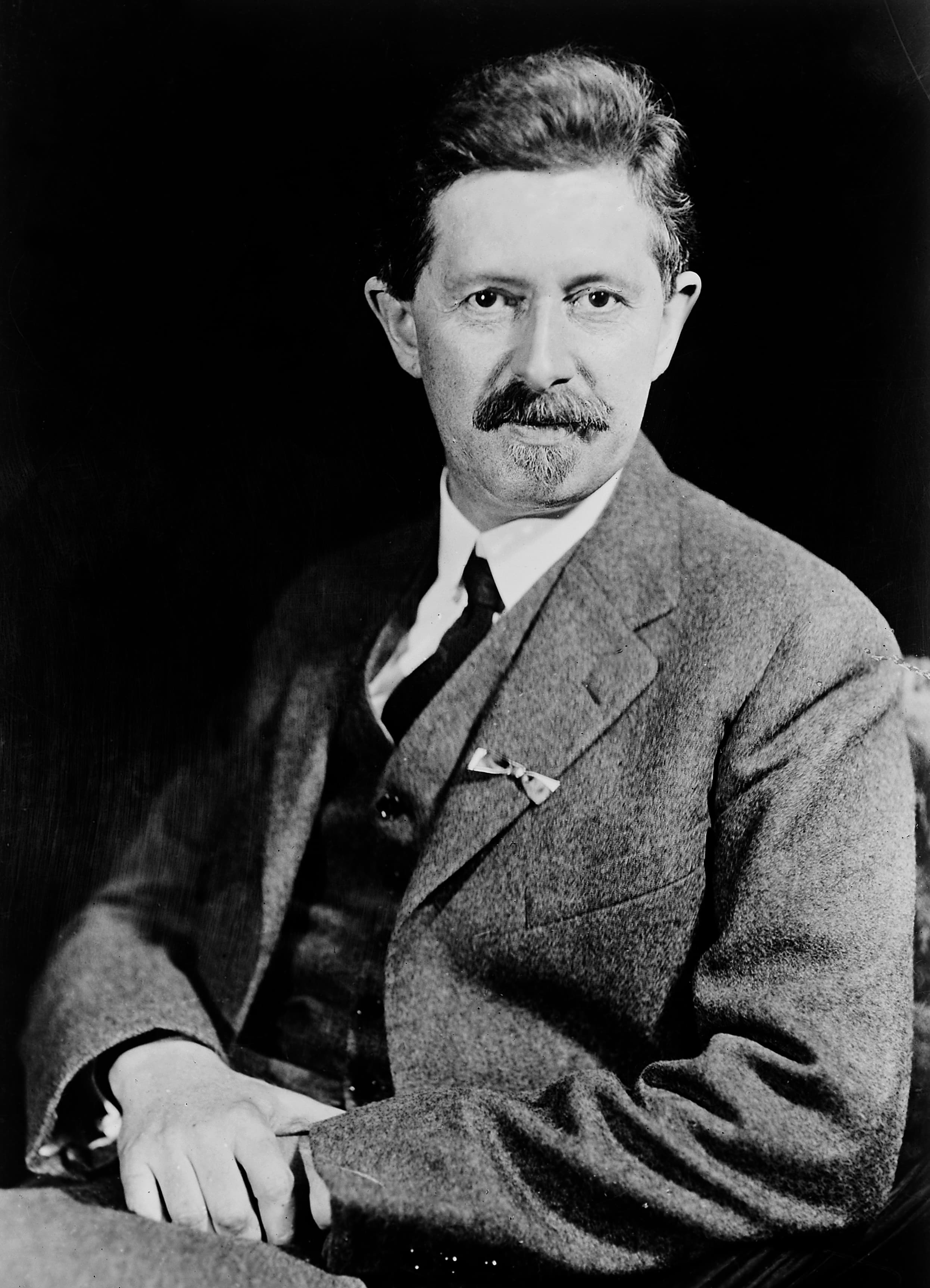
It is strange to look at a name like Histoplasma capsulatum and realize both halves are wrong. It is not a protozoan, and it has no capsule. Samuel Taylor Darling was a pathologist at Ancon Hospital in the Panama Canal Zone, where workers from around the world were dying of malaria and yellow fever while building one of the largest engineering projects the world had seen. In 1905 he opened an autopsy expecting tuberculosis and found something else entirely.
Historical scene
The Panama Canal in 1905 was a medical crisis as much as an engineering one. Thousands of laborers, many from the Caribbean, worked in heat and mud. Mosquito-borne disease was the biggest killer, and the hospital at Ancon was the front line. Darling, an American pathologist trained at Johns Hopkins, had come to Panama to study malaria. His job was to perform autopsies on workers who died and to try to untangle what was killing them. He was looking for one thing. He found another.
What happened
The patient was a 27-year-old carpenter from Martinique who had died of what appeared to be miliary tuberculosis. When Darling examined the tissue, he saw something unusual: tiny intracellular organisms packed inside histiocytes, each surrounded by a clear halo. To Darling, this looked like an encapsulated protozoan, similar in size and intracellular habit to Leishmania, but filling the tissues with a pattern he had never seen before. He published the case in JAMA in 1906 under a title that gave the organism its name: “A protozoon general infection producing pseudotubercules in the lungs and focal necrosis in the liver, spleen, and lymphnodes.” The name Histoplasma capsulatum broke down as tissue cytoplasm with a capsule, a description of what Darling thought he saw.
The capsule was a mirage. The clear halo Darling interpreted as an enclosing membrane was actually a shrinkage artifact, the gap that forms between the fungal cell wall and the surrounding cytoplasm when tissue is fixed and stained. There is no capsule. There never was. And the organism was not a protozoan. Nearly three decades passed before William A. DeMonbreun, a bacteriologist at Vanderbilt University, successfully cultured H. capsulatum from the bone marrow of a living patient. In 1934 he showed that it grew as a mold at room temperature and as budding yeast at body temperature, the classic pattern of a dimorphic fungus. Darling had been right about the morphology and wrong about the biology.
Why it changed infectious diseases
Histoplasmosis was not a medical curiosity confined to a single autopsy in Panama. Once DeMonbreun proved it was a fungus, investigators mapped its distribution. The organism turned out to be one of the most common endemic mycoses in the United States, concentrated in the Ohio and Mississippi River valleys. Skin testing with histoplasmin antigen showed that in places like Kansas City, 80 to 90 percent of lifelong residents had been exposed. Most infections were asymptomatic or self-limited, but the organism also caused chronic cavitary pulmonary disease, granulomatous mediastinitis, and disseminated disease in immunocompromised patients. In the era of HIV, disseminated histoplasmosis became an AIDS-defining illness, and the fungus Darling had mistaken for a protozoan was suddenly a major opportunist.
Why the mistaken name still matters
The name did not change after the mistakes were uncovered, and that is exactly why it matters. Histoplasma capsulatum preserves a moment when a sharp pathologist saw something real (the intracellular organisms) and something false (the capsule), wrote them both into a name, and sent that name forward. Every clinician who diagnoses histoplasmosis repeats Darling's error. Every microbiology textbook that prints capsulatum describes a structure that does not exist. The name is a fossil, and fossils are useful. They remind you that classification is provisional, that what a microscope shows and what a pathologist concludes are two different things, and that discovery sometimes means getting the big things wrong while getting the small things right enough that others can fix them later.
References
Darling ST. A protozoon general infection producing pseudotubercules in the lungs and focal necrosis in the liver, spleen, and lymphnodes. JAMA. 1906;46:1283.
DeMonbreun WA. The cultivation and cultural characteristics of Darling's Histoplasma capsulatum. Am J Trop Med. 1934;14:93-125.
Mahajan M. Etymologia: Histoplasma capsulatum. Emerg Infect Dis. 2021;27(3):969.
Kauffman CA. Histoplasmosis: a clinical and laboratory update. Clin Microbiol Rev. 2007;20(1):115-132.