HistorID
How Hepatitis C Became Curable
Harvey Alter proved the virus existed. Michael Houghton cloned it without ever seeing it. Ralf Bartenschlager made it grow in a dish. And Michael Sofia designed a pill that killed it. Four breakthroughs across fifty years, and none of them could have happened without the one before.
Hepatitis C is the first chronic viral infection definitively curable with oral medication. But the cure was not a single eureka moment. It required four successive breakthroughs — clinical, molecular, technological, and chemical — each impossible without the previous one.
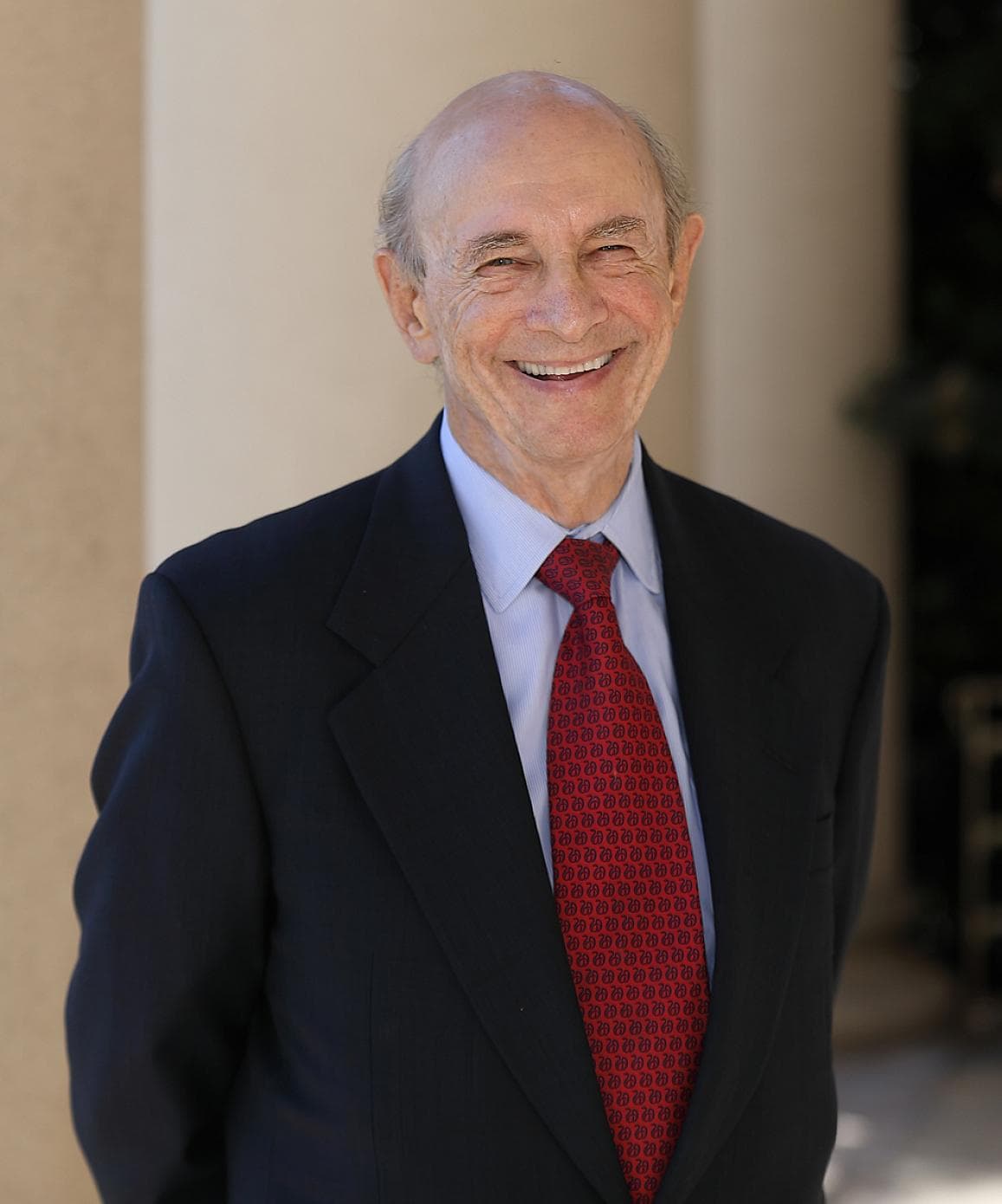
In the 1970s, hepatitis was a blood-bank nightmare. Roughly one in three transfusion recipients developed it. Screening for hepatitis B eliminated many cases. But plenty remained. Harvey Alter, a young NIH researcher who had already co-discovered the Australia antigen that made hep B testing possible, was not satisfied. He collected serial blood samples from transfusion recipients, tested them for every known hepatitis agent, and proved something unsettling: a third hepatitis virus existed. He called it non-A, non-B hepatitis. He shipped infected blood to a chimpanzee colony in Texas, where Bob Purcell demonstrated transmissibility — a virus, not some other toxin. Alter had defined the clinical footprint of a pathogen no one could see, culture, or test for. That was the state of things for fifteen years.
The Hunt
Finding a virus without growing it is like finding a specific grain of sand on a beach without a metal detector. Michael Houghton and his team at Chiron Corporation in Emeryville, California, attempted something that had never been done. They extracted nucleic acid from the plasma of chimpanzees infected with Alter's non-A, non-B inoculum, built a complementary DNA library of millions of fragments, and screened each one against serum from a patient with chronic NANBH. The bet was that somewhere in those millions of clones, one would encode a viral protein the patient's immune system had made antibodies against. After screening six million clones, they found one. Clone 5-1-1. From that single fragment, Qui-Lim Choo and George Kuo walked out along the genome in both directions, assembling the complete sequence of what they called the hepatitis C virus. The result was published in Science in April 1989. No one had ever identified a virus this way. Houghton later described the work as trying to find a needle in a haystack where you had never seen a needle and did not know what a needle looked like.
The discovery was seismic. Within a year, blood banks had an HCV antibody test. Transfusion-transmitted hepatitis C plummeted from roughly thirty percent to near zero. But the virus itself was still a black box. You could detect it. You could not grow it. And you certainly could not test drugs against it. The standard treatment — forty-eight weeks of injected interferon alpha plus oral ribavirin — had been developed empirically, without any ability to screen compounds in cell culture. It cured roughly half of patients with genotype 1 and caused flu-like symptoms, depression, anemia, and bone marrow suppression so severe that many patients could not complete the course.
The Tool
Ralf Bartenschlager, a young German virologist, had spent a postdoc at Chiron just as HCV was being discovered. By 1999 he was running his own laboratory at the University of Mainz. The problem he fixed was fundamental: HCV replicated poorly in cell culture — so poorly that it was functionally impossible to study. Bartenschlager engineered a stripped-down version of the viral genome called a replicon: a subgenomic RNA that encoded only the nonstructural proteins needed for replication, plus a selectable marker. He put it into a human hepatoma cell line. The cells that survived selection had the replicon replicating inside them. For the first time, there was a system in which HCV RNA polymerase, protease, and helicase were all active in a human cell — and in which you could add a drug and watch what happened.
Charles Rice at Washington University, who had independently been working toward the same goal, built on Bartenschlager's work. In 2005, Rice's lab created the first fully infectious HCV cell culture system by finding a clinical isolate that replicated robustly enough to produce infectious virus particles. Now you could do everything: grow the virus, infect new cells, and — critically — screen small molecules against every step of the viral lifecycle. The starting gun for the drug race had fired.
The Cure
The first wave of direct-acting antivirals arrived in 2011: telaprevir and boceprevir, both NS3 protease inhibitors from Vertex and Merck. They boosted cure rates to roughly seventy percent for genotype 1 but still required interferon and ribavirin as a backbone. The side effects remained punishing. What everyone wanted was an all-oral, interferon-free regimen. What made that possible was sofosbuvir.
Michael Sofia had spent years working on antiviral chemistry at Bristol-Myers Squibb and then at a tiny biotech called Pharmasset, tucked away in Princeton, New Jersey. Pharmasset had fewer than eighty employees. Sofia was trying to solve an old problem: how to get a nucleoside analog — a fake building block that stops viral RNA polymerase — into liver cells in its active triphosphate form. Nucleoside analogs are chemically simple, but the first phosphorylation step is usually too slow in human cells to produce useful drug levels. Sofia used an approach called ProTide, first developed by Chris McGuigan at Cardiff University. The prodrug carries a pre-built phosphate masked by chemical groups that let it slip across cell membranes. Once inside a hepatocyte, cellular enzymes strip the mask and release the monophosphate, which the cell's own kinases rapidly convert to the active triphosphate. The triphosphate then competes with natural uridine for incorporation into the growing viral RNA by the NS5B polymerase — and once incorporated, it terminates the chain.
Sofia's team built a uridine nucleotide analog with a fluorine at the 2' position and a methyl group on the ribose ring. They named it PSI-7977, later sofosbuvir. In early clinical trials, the results were startling. Patients who received sofosbuvir showed viral-load drops so steep and so sustained that investigators could see a cure coming in the pharmacokinetic curves. In 2011, before sofosbuvir was even approved, Gilead Sciences acquired Pharmasset for eleven billion dollars. At the time, many analysts called the price insane. Within two years, it looked like a bargain.
The FDA approved sofosbuvir in December 2013. For genotypes 2 and 3, it was the first interferon-free regimen — just the pill plus ribavirin for twelve weeks. In 2014, Gilead combined sofosbuvir with ledipasvir, an NS5A inhibitor, into a single-tablet regimen called Harvoni. One pill a day. Eight to twelve weeks. Cure rates exceeding ninety-five percent for genotype 1, the most common and previously hardest-to-treat strain. No interferon. No injections. Side effects: mild fatigue, mild headache. In 2016, the FDA approved Epclusa — sofosbuvir plus velpatasvir — effective against all six major HCV genotypes. By 2017, AbbVie's glecaprevir plus pibrentasvir offered an eight-week pan-genotypic course.
The Nobel Prize in Physiology or Medicine went to Alter, Houghton, and Rice in 2020. It was awarded for the discovery, not the cure. But the two are inseparable. Without Alter's clinical detective work, there is nothing to look for. Without Houghton's molecular fishing expedition, there is no genome. Without Bartenschlager's replicon and Rice's culture system, there is no way to test drugs. And without Sofia's chemistry, there is no pill that makes the whole thing curable. Four different kinds of genius, stacked across half a century.
Why It Changed Infectious Diseases
Hepatitis C is the first chronic viral infection definitively curable with oral medication. HIV requires lifelong therapy. Herpesviruses establish latency that current drugs suppress but do not eliminate. Hepatitis B can be controlled but rarely cured. HCV stands alone: a finite course of pills that permanently clears the virus. The sustained virologic response — no detectable HCV RNA twelve weeks after completing treatment — is considered a cure. Liver inflammation resolves. Fibrosis can regress. The risk of hepatocellular carcinoma drops. The virus is gone.
The HCV story also changed the relationship between basic science and drug development. The replicon system was not an incremental advance. It was an enabling platform — an entire field unlocked by one laboratory innovation. The ProTide prodrug approach that made sofosbuvir possible became a template for antiviral drug design more broadly, now applied to HIV, SARS-CoV-2, and other RNA viruses. And the clinical trials that proved sofosbuvir's efficacy demonstrated something that shaped regulatory thinking ever after: with a sufficiently potent antiviral, you can measure viral kinetics in the first days of dosing and know whether the drug will cure.
Why It Still Matters Now
An estimated fifty-eight million people live with chronic hepatitis C worldwide. Roughly four hundred thousand die from it each year, mostly from cirrhosis and hepatocellular carcinoma. The World Health Organization set a goal of eliminating HCV as a public health threat by 2030. With current treatments, that goal is biologically achievable — cure the reservoir, stop the transmission. What stands in the way is not science. It is access. Sofosbuvir launched in the United States at a list price of a thousand dollars per pill, or eighty-four thousand dollars for a twelve-week course. Generic licensing agreements have since made treatment available for under a hundred dollars in many low-income countries, but middle-income nations remain caught between. The tools exist. The question is whether the world will use them.
There is still no vaccine for hepatitis C. The virus mutates too quickly and the envelope glycoproteins are shielded by lipoproteins in ways that frustrate antibody responses. The RNA-dependent RNA polymerase has no proofreading function. Every infected person carries a swarm of viral quasispecies. These are the same properties that make HCV hard to vaccinate against and hard to treat with a single drug — which is why the cure required combining agents that hit multiple viral targets simultaneously.
The longer lesson of this story is that a cure is never one thing. It is always a chain. Someone names the problem. Someone finds the agent. Someone builds the tool. Someone designs the molecule. And someone else, years earlier and entirely by accident, invents the chemistry that makes the molecule possible. The ProTide technology sat in a lab at Cardiff University for over a decade before anyone applied it to a nucleoside analog that could cure a disease. Harvey Alter was still working at the NIH — still publishing, still seeing patients — when the 2020 Nobel was announced, more than fifty years after he first proved the ghost disease was real.
References
Choo QL, Kuo G, Weiner AJ, Overby LR, Bradley DW, Houghton M. Isolation of a cDNA clone derived from a blood-borne non-A, non-B viral hepatitis genome. Science. 1989;244(4902):359-362.
Lohmann V, Korner F, Koch JO, Herian U, Theilmann L, Bartenschlager R. Replication of subgenomic hepatitis C virus RNAs in a hepatoma cell line. Science. 1999;285(5424):110-113.
Sofia MJ, Bao D, Chang W, et al. Discovery of a beta-d-2'-deoxy-2'-alpha-fluoro-2'-beta-C-methyluridine nucleotide prodrug (PSI-7977) for the treatment of hepatitis C virus. J Med Chem. 2010;53(19):7202-7218.
Lawitz E, Mangia A, Wyles D, et al. Sofosbuvir for previously untreated chronic hepatitis C infection. N Engl J Med. 2013;368(20):1878-1887.
The Nobel Assembly at Karolinska Institutet. Press release: The Nobel Prize in Physiology or Medicine 2020. October 5, 2020.
Link: https://www.nobelprize.org/prizes/medicine/2020/press-release/
McHutchison JG, Lawitz EJ, Shiffman ML, et al. Peginterferon alfa-2b or alfa-2a with ribavirin for treatment of hepatitis C infection. N Engl J Med. 2009;361(6):580-593.