HistorID
Candida and the White Toga
Candida and candidate are cousins. Both come from the Latin language of whiteness: a bright toga in Roman politics and a pale yeast name in medical mycology.
Candida's name preserves an older medical habit: naming organisms from what clinicians and taxonomists could see before molecular tools existed.
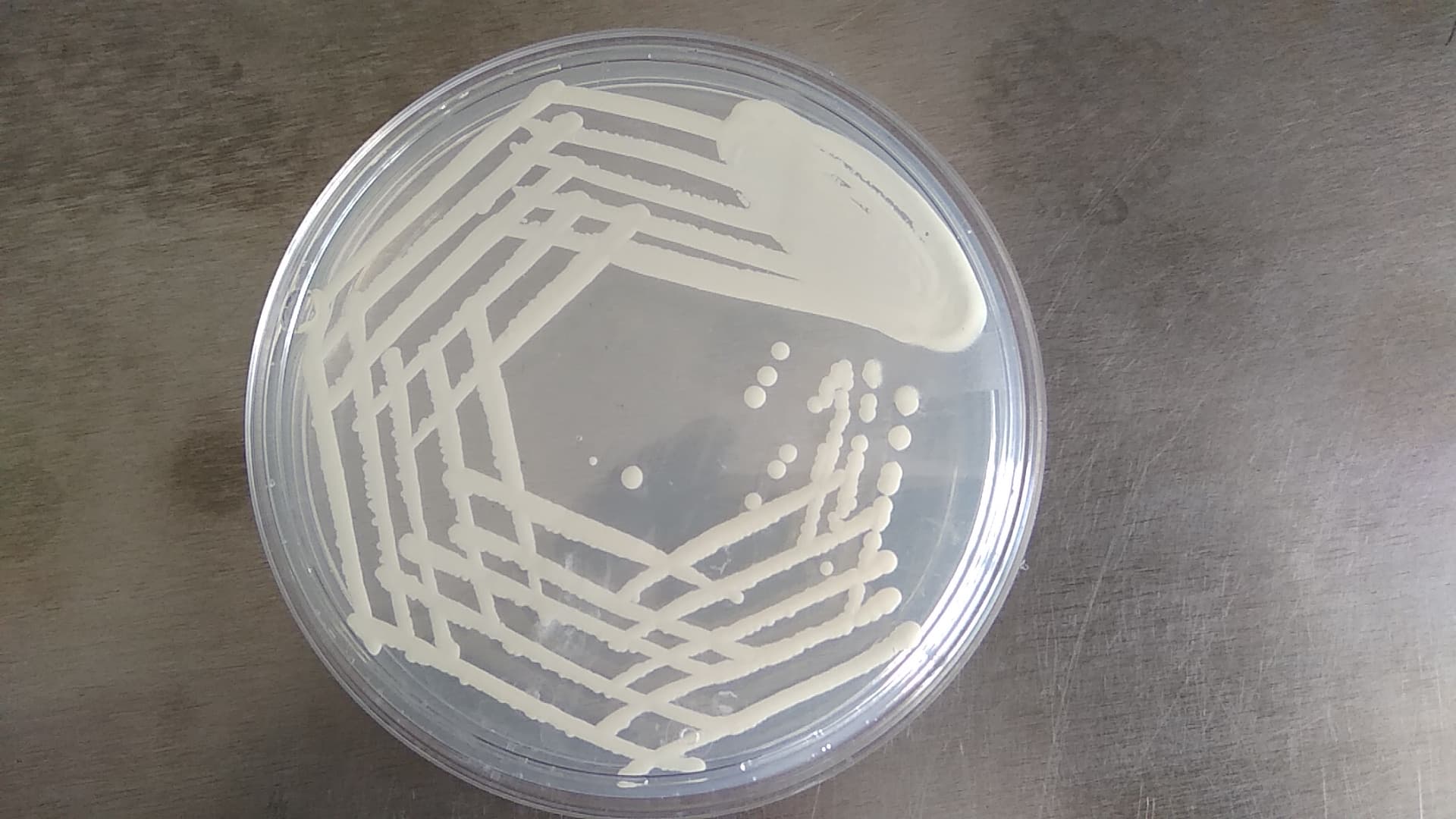
Candida and candidate are cousins. One word sits on microbiology reports and blood culture panels; the other belongs to elections. Both reach back to the same Latin image: a person trying to be seen in bright white clothing. The Roman candidatus was literally the white-robed one, an office-seeker in a gleaming toga candida.
The Latin root
The root is visual. Latin candere meant to shine, glow, or be white. From it came candidus, meaning bright white or shining. A Roman candidate did not begin as an abstract democratic concept. He was the man in the whitened toga, made conspicuous in public by clothing that had been brightened, traditionally with chalk. The word carried whiteness before it carried campaign ambition.
How whiteness reached the yeast
Medical mycology had its own white object. Thrush appeared as pale plaques on mucosa, and yeast colonies could look creamy, glistening, and white on culture media. The species name albicans already pointed in the same direction, from the Latin idea of becoming white or appearing white. Put together, Candida albicans is almost a double-white name: a bright genus joined to a whitening species.
The taxonomic shuffle
The organism did not always live under the name clinicians now use. Older medical and mycologic literature placed it in other genera, including Oidium albicans and Monilia albicans. The name Candida entered yeast taxonomy through Christine Marie Berkhout's 1923 Utrecht thesis on Monilia, Oidium, Oospora, and Torula. Later taxonomists debated the boundaries of the genus, but Berkhout's name endured in clinical medicine.
Why it changed infectious diseases
The naming story matters because it shows how medicine moves from appearances to categories. Thrush was visible long before the organism was stably classified. White plaques, pale colonies, budding cells, pseudohyphae, and fermentation patterns all helped early mycologists sort a messy group of yeast-like fungi. The name did not solve the biology, but it helped give clinicians and laboratories a shared label for a familiar problem.
Why the white name now feels too small
Modern Candida is bigger than the image that named it. It is a commensal organism, a cause of oral thrush and vulvovaginitis, a biofilm former on catheters and prosthetic material, and a bloodstream pathogen in intensive care units. The genus has also become a moving target as fungal taxonomy changes and species once called Candida are reassigned. Still, the old white name remains clinically sticky. It reminds us that many organism names began at the bedside or the bench, where the first diagnostic tool was the eye.
References
Harper D. Candidate. Online Etymology Dictionary. Entry describing Latin candidatus, candidare, candidus, candere, and the toga candida.
Mackinnon JE, Artagaveytia-Allende RC. The so-called genus Candida Berkhout, 1923. Journal of Bacteriology. 1945;49(4):317-334.
Jenkinson HF, Douglas LJ. Interactions between Candida species and bacteria in mixed infections. In: Brogden KA, Guthmiller JM, eds. Polymicrobial Diseases. ASM Press; 2002.