HistorID
Burkholder's Onion
A genus that kills CF patients, causes melioidosis, and sits on the CDC's bioweapon list started with a plant pathologist in upstate New York who was trying to figure out why onions were rotting. Both the man and the vegetable are still in the name.
Burkholderia cepacia means Burkholder's onion. Every ID clinician who says that name is naming a plant pathologist and a vegetable from 1949. The genus became clinically important decades later, but the etymology never moved past the crop field where the story started.
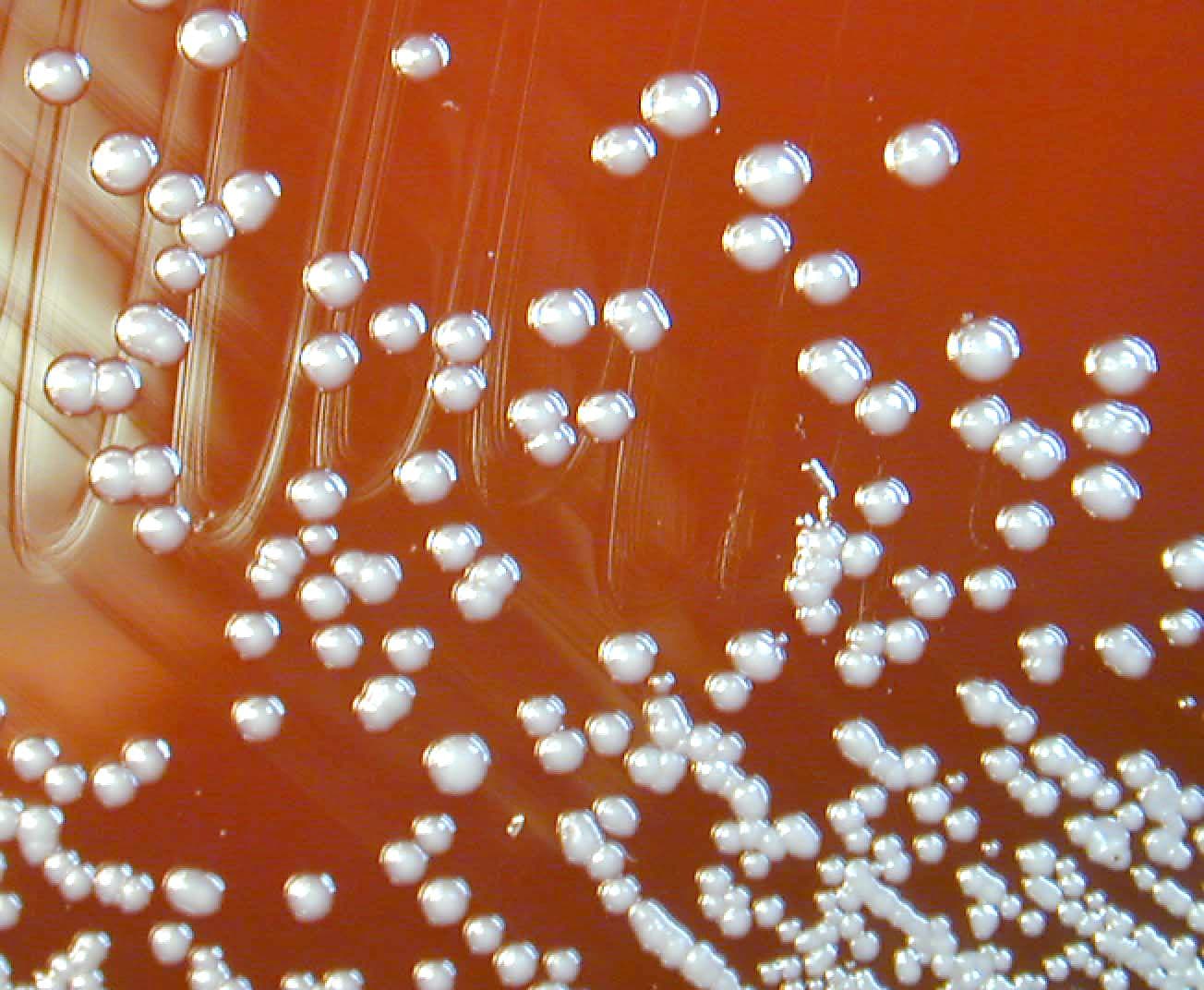
It is strange that one of the most feared organisms in cystic fibrosis medicine owes its name to a plant pathologist and a vegetable. The genus is Burkholderia, the species is cepacia, and together they mean Burkholder's onion. Walter H. Burkholder was not a physician. He did not work in a hospital. He was a professor of plant pathology at Cornell University, and in 1949 he was trying to figure out what was making onion bulbs turn soft and sour in the fields of upstate New York. The bacterium he found would take more than four decades to get his name, and more than half a century to become a clinical terror.
Historical scene
Cornell University in the 1940s was a center of American plant pathology. The onion-growing regions of New York \u2014 the Black Dirt of Orange County, the muckland soils farther north \u2014 produced crops that fed the Northeast. When onion bulbs rotted in storage, farmers lost money and plant pathologists had a problem. Burkholder, who had earned his PhD at Cornell in 1917 and stayed on as faculty, was one of the people who helped establish that bacteria could be plant pathogens. In 1949 he isolated a bacterium from diseased onion bulbs. He called the condition sour skin rot. He called the organism Pseudomonas cepacia.
What happened
Burkholder published the description in Phytopathology in 1950. The specific epithet cepacia came from Allium cepa, the common onion. For decades the organism sat comfortably in Pseudomonas, where it was placed alongside hundreds of other Gram-negative rods. Nobody thought much of it beyond agricultural circles. Then molecular phylogenetics arrived. In 1992, a Japanese group led by Eiko Yabuuchi used 16S rRNA sequencing, fatty acid profiling, and ubiquinone analysis to show that seven species in Pseudomonas homology group II were not Gammaproteobacteria at all. They were Betaproteobacteria, a different class entirely.
Yabuuchi and colleagues proposed a new genus and named it after the man who had first described the type species. The paper, published in Microbiology and Immunology, created Burkholderia from Burkholder plus the Neo-Latin suffix -eria. The name did not describe the organism's biology. It described a person. That person had spent his career studying crop diseases. The type species became Burkholderia cepacia, and the onion was still right there in the name, forty-two years after Burkholder first saw it under his microscope.
Why it changed infectious diseases
The reclassification was not just taxonomic housekeeping. Once Burkholderia had a genus to itself, the clinical picture sharpened. Over the 1990s and 2000s, the Burkholderia cepacia complex \u2014 now known to contain more than twenty genomovars \u2014 emerged as one of the most feared pathogens in cystic fibrosis. It spread from patient to patient. It was resistant to most antibiotics, and it could survive in disinfectant solutions. Outbreaks in CF centers carried mortality rates of 35 percent. Infection with B. cenocepacia became a contraindication for lung transplant. The genus also contained B. pseudomallei, the cause of melioidosis, a soil-dwelling pathogen with 20 to 50 percent mortality even with treatment, and B. mallei, the agent of glanders, which had been used to infect horses and mules during World War I. Both are now classified as CDC Tier 1 select agents. A plant pathologist's onion bacterium had become a clinical and biodefense priority.
Why the onion still matters now
The name has not changed. Burkholderia cepacia still means, literally, Burkholder's onion. That is not a footnote. It is a reminder that medically important organisms do not announce themselves in hospitals. They are found in soil, in water, in the rhizosphere of plants, and sometimes in a rotting vegetable in upstate New York. Burkholder was not looking for a human pathogen. He was looking at an onion. The name preserves that origin, and every ID clinician who says it is repeating a story that starts in a crop field, not a clinic. The organism crossed into human medicine later. The name stayed where it began.
References
Burkholder WH. Sour skin, a bacterial rot of onion bulbs. Phytopathology. 1950;40(1):115-117.
Yabuuchi E, Kosako Y, Oyaizu H, Yano I, Hotta H, Hashimoto Y, Ezaki T, Arakawa M. Proposal of Burkholderia gen. nov. and transfer of seven species of the genus Pseudomonas homology group II to the new genus, with the type species Burkholderia cepacia (Palleroni and Holmes 1981) comb. nov. Microbiol Immunol. 1992;36(12):1251-1275.
Wikipedia contributors. Burkholderia. Wikipedia, The Free Encyclopedia.
Mahenthiralingam E, Urban TA, Goldberg JB. The multifarious, multireplicon Burkholderia cepacia complex. Nat Rev Microbiol. 2005;3(2):144-156.