HistorID
Before It Was E. coli
Before it was E. coli, it was just the common colon bacillus in Theodor Escherich's infant-gut studies. One of medicine's most famous bacteria started with a much plainer name and a pediatrician's microscope.
The naming story still matters because it captures the organism's double life. What began as a normal intestinal resident in pediatric bacteriology later became one of the clearest examples of how a commensal can turn into a pathogen.
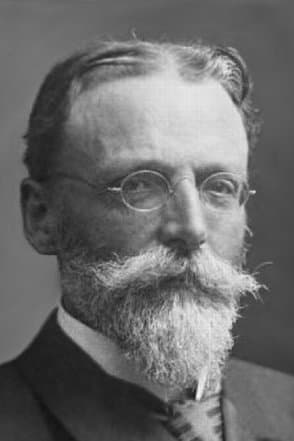
If you say E. coli on rounds, nobody thinks first about a pediatrician in the 1880s. They think about bacteremia, pyelonephritis, O157, ESBLs, maybe a urine culture already growing in the lab. But the name is worth slowing down for. Before the abbreviation, before the species binomial, there was Theodor Escherich and his much less glamorous phrase for it: the common colon bacillus.
Historical scene
Escherich was not a general bacteriologist dabbling in children. He was a pediatrician working at a moment when infant digestion, diarrhea, and intestinal life were becoming legitimate medical territory. Late 19th-century medicine was learning that the bowel was not empty background noise. It had residents, patterns, and consequences. That made infant stools, unromantic as they were, worth the microscope.
What happened
In 1886, after intensive bacteriologic work, Escherich published Die Darmbakterien des Säuglings und ihre Beziehungen zur Physiologie der Verdauung, his monograph on the intestinal bacteria of infants and their relation to digestion. In that work he described the organism he called Bacterium coli commune. The name made plain sense. It was the common bacterium of the colon. No prophecy, no grandeur, no hint yet that this same organism would later become one of the best-known names in medicine.
The later name came in pieces. The genus Escherichia was proposed in 1919, honoring Theodor Escherich. The species term coli stayed rooted in anatomy: according to LPSN, it is the Latin genitive meaning "of the colon." So Escherichia coli preserves both the person and the place. It is Escherich's organism, and it is still the colon's.
Why it changed infectious diseases
The discovery mattered because it helped make the intestine microbiologic territory rather than a vague digestive black box. Escherich's work belongs in ID history not only because of what the organism later became, but because it helped establish that ordinary resident flora were worth describing carefully. That turned out to be a bigger idea than anyone could see at the time.
And then the organism's career expanded in every direction. E. coli became a cause of UTI, neonatal disease, bacteremia, peritonitis, and foodborne disaster. It also became one of the most worked-on organisms in experimental biology. Few microbes swing so easily between commensal, pathogen, and laboratory instrument.
Why the name still matters now
The name is a reminder that one organism can carry two truths at once. It can be normal flora in one context and a dangerous pathogen in another. Modern ID lives inside that tension all the time. We do not just ask what species this is. We ask where it is, what strain it is, and what it is doing there. Escherich's common colon bacillus turned into a perfect lesson in why location, context, and virulence matter as much as the name on the plate.
References
Shulman ST, Friedmann HC, Sims RH. Theodor Escherich: the first pediatric infectious diseases physician? Clin Infect Dis. 2007;45(8):1025-1029.
Escherich T. Die Darmbakterien des Säuglings und ihre Beziehungen zur Physiologie der Verdauung. Stuttgart: F. Enke; 1886.
LPSN. Escherichia. Genus entry noting that the name honors Theodor Escherich and that the genus was proposed in 1919 by Castellani and Chalmers.
LPSN. Escherichia coli. Species entry giving the etymology of coli as the Latin genitive meaning "of the colon."
Encyclopaedia Britannica. E. coli. Overview of the organism's normal intestinal role and its pathogenic potential.
Wikimedia Commons. Escherich, Theodor portrait.