HistorID
A Lifetime with Mercury
A night with Venus, a lifetime with Mercury. The line survived because, for generations, syphilis treatment could be nearly as memorable as the disease.
Mercury treatment for syphilis is a lesson in therapeutic illusion: when an infection relapses and remits, a toxic intervention can look effective unless cure is measured carefully.
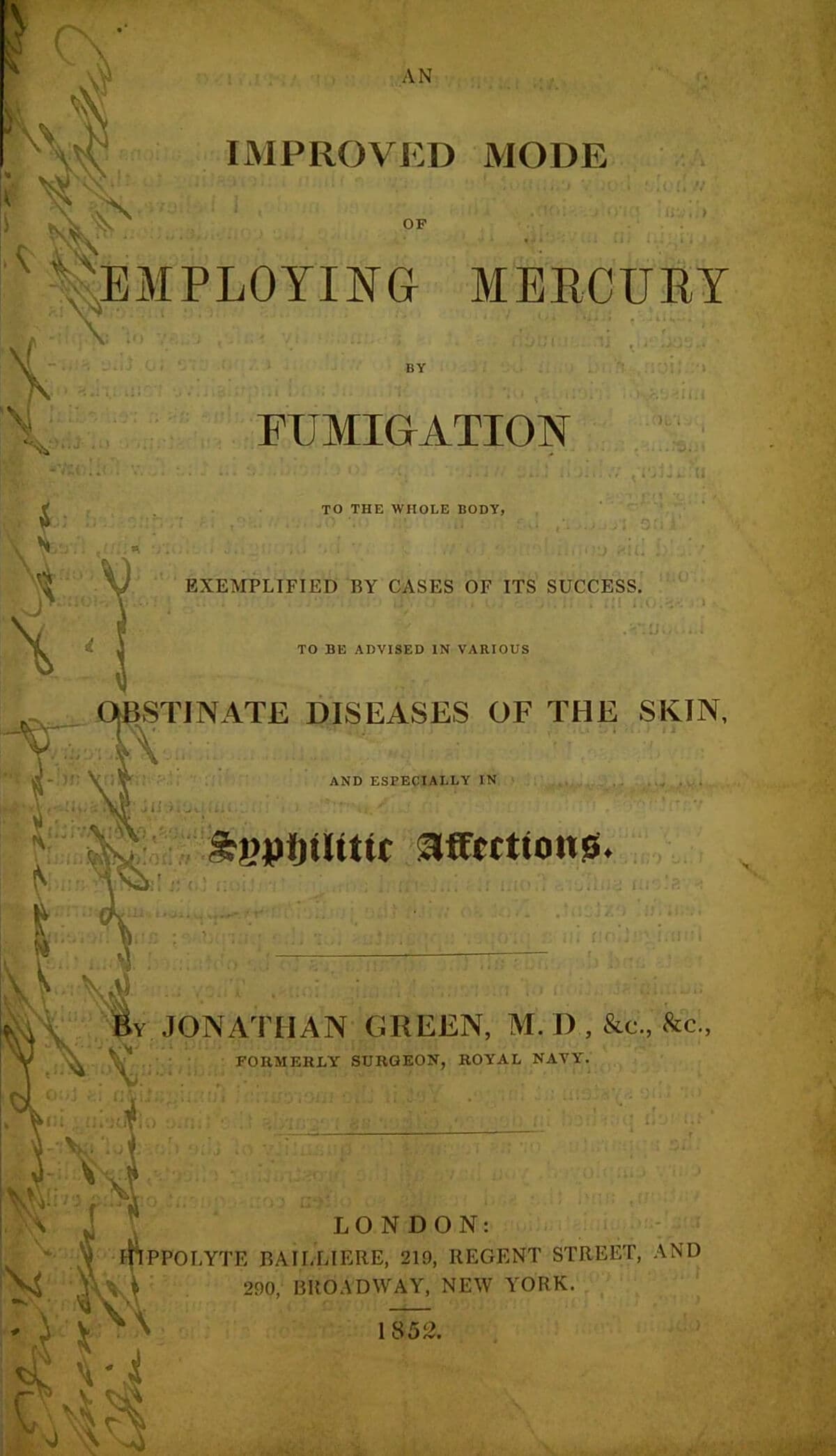
"A night with Venus, a lifetime with Mercury" was not just a joke about sexual risk. It was a clinical summary of an era. Long before Treponema pallidum had a name, patients with syphilis were rubbed with mercury, given mercury pills, placed in mercury baths, or shut into fumigation boxes where the drug reached the skin as vapor. The treatment could inflame the gums, loosen teeth, provoke salivation, injure the kidneys, and poison the nervous system. For centuries, that toxicity was part of the therapeutic plan.
Historical scene
Syphilis arrived in European medical writing near the end of the 15th century as the "great pox," a frightening illness associated with genital ulcers, rash, bone pain, disfigurement, and later neurologic disease. Physicians had no spirochete, no serology, and no way to distinguish microbial cure from temporary clinical improvement. They worked with the medical logic they had: corrupted humors, visible lesions, purging, and the belief that a powerful disease required a powerful counterforce.
What happened
Mercury fit that world. It had been used for some skin conditions, and syphilis often announced itself on the skin and mucous membranes. Treatment took many forms. Inunction meant rubbing mercury-containing ointment into the skin for days or weeks. Other patients received oral preparations or sat in heated cabinets where mercury vapor was directed over the body. The aim was often not subtle symptom relief but a visible physiologic reaction, especially heavy salivation. A patient who drooled, developed gingivitis, or felt unmistakably altered by the drug could be read as someone in whom treatment was "working."
Why physicians believed it worked
Syphilis made mercury look better than it was. Primary chancres can heal, secondary rashes can fade, and symptoms can retreat for long intervals even when the infection persists. A toxic treatment given during a naturally changing disease can inherit credit for the remission. The problem was not that every physician was careless or foolish. The problem was that the disease's tempo made clinical impression unreliable. Without a microbial target or durable outcome measure, intensity could masquerade as efficacy.
Why it changed infectious diseases
The history of syphilis treatment traces a larger turn in infectious diseases: from purging the patient to targeting the pathogen. Mercury belonged to the older therapeutic world. In 1905, Schaudinn and Hoffmann identified Treponema pallidum. A few years later, Paul Ehrlich's laboratory developed arsphenamine, marketed as Salvarsan, an arsenical compound meant to attack the organism more directly. It was imperfect and still toxic, but the ambition had changed. The target was no longer a polluted body in need of evacuation. It was an identifiable microbe.
Why penicillin ended the argument
Penicillin changed syphilis care because it offered what mercury never could: reliable, microbiologically grounded cure with far less toxicity. By the 1940s, penicillin treatment made the older mercury regimens look like artifacts from a different medical language. The shift was not simply from a bad drug to a better drug. It was a shift from visible suffering as evidence of treatment to measurable eradication of infection as the goal.
Why it still matters now
Mercury therapy is useful ID history because it warns against therapeutic illusion. Chronic infections, relapsing syndromes, and diseases with fluctuating symptoms can make interventions appear effective when the natural history is doing the work. Modern clinicians have better tools, but the cognitive trap is old: if a patient changes after treatment, we want to believe the treatment caused the change. Syphilis forced medicine to learn a harder standard. Cure has to be more than a dramatic reaction. It has to last, and it has to reach the pathogen.
References
Green J. An improved mode of employing mercury by fumigation to the whole body, exemplified by cases of its success... especially in syphilitic affections. London: Hippolyte Bailliere; 1852.
Frith J. Syphilis: its early history and treatment until penicillin, and the debate on its origins. J Mil Veterans Health. 2012;20(4):49-58.
Tampa M, Sarbu I, Matei C, Benea V, Georgescu SR. Brief history of syphilis. J Med Life. 2014;7(1):4-10.
Mahoney JF, Arnold RC, Harris A. Penicillin treatment of early syphilis: a preliminary report. Am J Public Health Nations Health. 1943;33(12):1387-1391.