A Nose Lesion that Wouldn’t Heal
Clinical Vignette
A 42-year-old man presents with several years of progressive nasal obstruction, nasal discharge, and intermittent epistaxis. Over the past 6 months, he has noticed worsening facial swelling and distortion of the nasal bridge, associated with a muffled voice and difficulty breathing through his nose. He denies fever, weight loss, night sweats, or cough.
He was born and raised in rural Thailand and immigrated to the United States approximately 10 years ago. He reports living in crowded housing during childhood and early adulthood and has limited access to medical care. Most recently he has vacationed in South America (Peru and Brazil) about 6 months prior. He denies tobacco or illicit drug use. He denies any history of autoimmune disease or immunosuppression.
Physical examination reveals firm, nodular thickening of the nasal mucosa with partial obstruction of both nares. The nasal bridge appears broadened and indurated. There is no cervical lymphadenopathy. Oral examination shows extension of nodular tissue into the nasopharynx. Lung and cardiac examinations are normal.
Computed tomography of the face demonstrates soft tissue masses involving the nasal cavity and nasopharynx with focal erosion of adjacent bone, without abscess formation. A biopsy of the nasal lesion is performed and shown below. Histopathology reveals granulomatous inflammation with numerous foamy macrophages containing intracellular Gram-negative bacilli (Mikulicz cells).
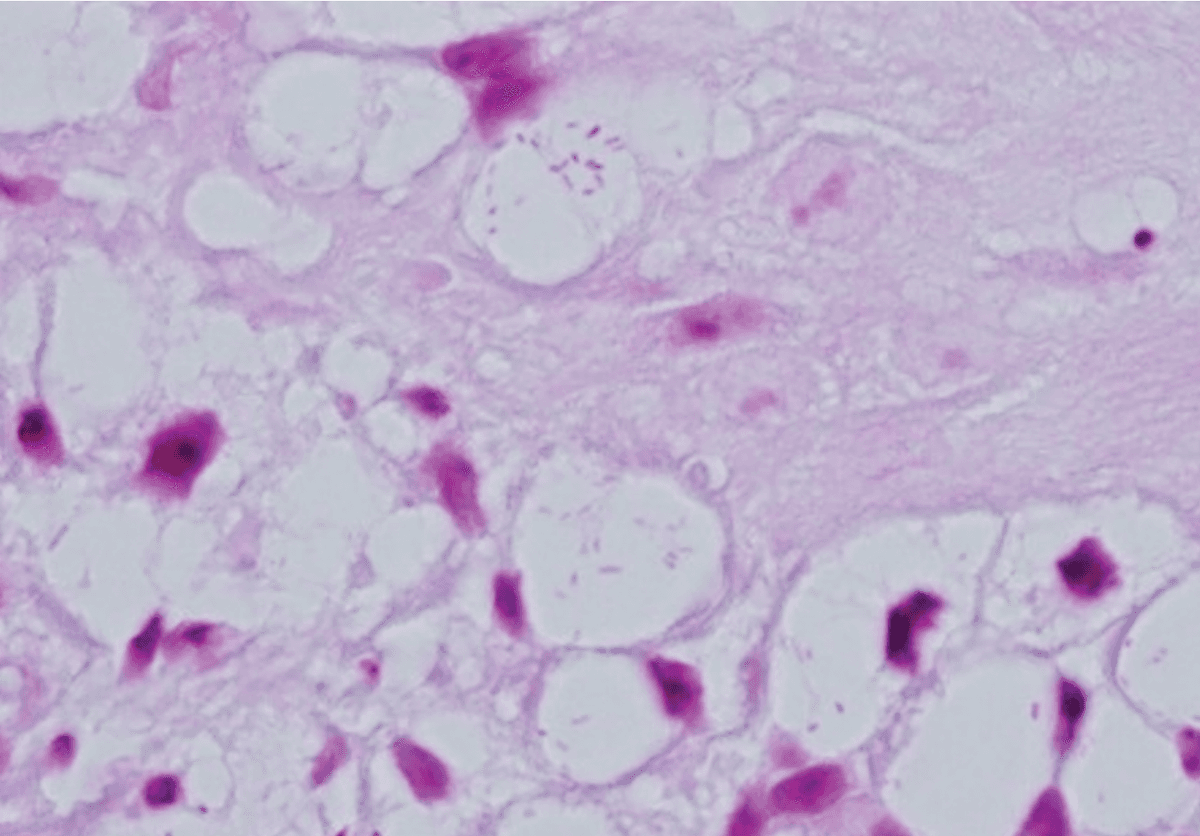
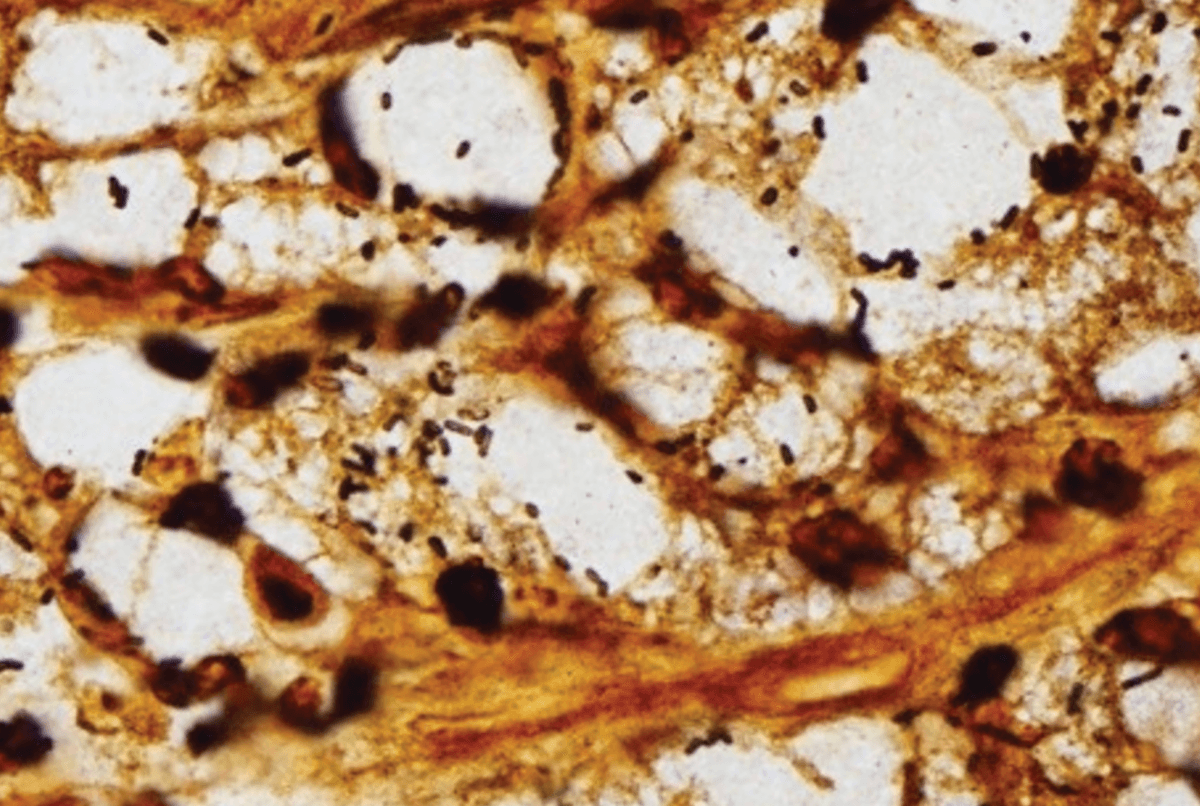
Left: Gram stain showing intracellular Gram-negative bacilli within Mikulicz cells. Right: Steiner staining highlights the bacilli within the cytoplasm of the Mikulicz cells.
Question
Which of the following is the most likely causative organism?
Select one answer to view the rationale and peer response data.
Rationale locked
Answer the question above to reveal the rationale.
Rationale locked
Answer the question above to reveal the rationale.
References
Lenis A, Ruff T, Diaz JA, et al. Rhinoscleroma. Southern Medical Journal. 1988;81:1580–1582.